Inside the 393-Year-Old Vienna Crypt That’s Home to 150 Dead Habsburgs
If you’ve ever wanted to be surrounded by the remains of one of the most powerful royal dynasties in European history, you need to head to Vienna. Hidden beneath the nondescript Kapuzinerkirche (Capuchin Church) in the center of the city, the Imperial Crypt Vienna is like the Hollywood Forever Cemetery. But instead of celebrities, it’s the final resting place for 150 members of the Habsburg family.
And despite being one of the most fascinating places in Vienna, many people visit the Austrian capital without knowing it exists. Here’s how you can experience one of the city’s most underrated and macabre attractions.
This post may contain affiliate links, meaning if you decide to make a purchase, I may earn a small commission at no additional cost to you. Read the full privacy policy here.
The Imperial Crypt Vienna at a Glance
📍 Location: Kapuzinerkirche, Innere Stadt
⏱️ Time Needed: 30–60 minutes
🎟️ Tickets: Check Prices & Availability
👥 Crowds: Minimal during my afternoon visit
🏛️ Pair It With: The Hofburg & Sisi Museum or the Imperial Treasury
What Is the Imperial Crypt?
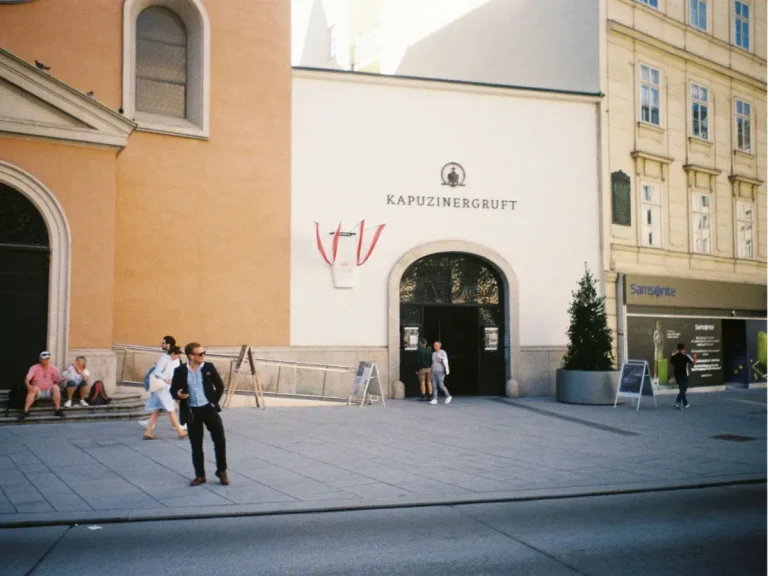
The Imperial Crypt Vienna, also known as the Capuchin Crypt, contains nearly 400 years of imperial history, specifically in the form of dead bodies. It has served as the burial place of the Habsburg family since 1633.
For centuries, the Habsburg dynasty ruled over huge parts of Europe, earning it the name of the Holy Roman Empire. But as Voltaire and Tom Holland of my favorite podcast “The Rest is History” never tires of reminding listeners, it was “neither holy, nor roman nor an empire.”
The Habsburgs are also known for their centuries of inbreeding, which gave birth to the famous “Habsburg jaw.” Just look up King Charles II of Spain and you’ll see what I mean.
A few names worth knowing before you go:
Maria Theresa
Known as the Mother-in-Law of Europe, Maria Theresa ruled for 40 years and had 16 children, including Marie Antoinette. To this day she remains one of the most powerful women in European history. Naturally, her tomb is enormous and completely dominates the room. She earned it.
Franz Joseph I
Franz Joseph ruled the Austro-Hungarian Empire for nearly 68 years and became one of the defining figures of the dynasty. He died in 1916 during World War I.
Empress Elisabeth (Sisi)
Sisi is probably the most romanticized figure in Austrian history. Her life has inspired movies, books, Netflix series (it’s really good), musicals and roughly half the souvenir shops in Vienna. She’s buried here alongside Franz Joseph.
There isn’t a test after you walk through the crypt, so you don’t need to memorize any of this. But it’s always useful to know which dead emperor or empress you’re staring at.
Highlights of the Imperial Crypt
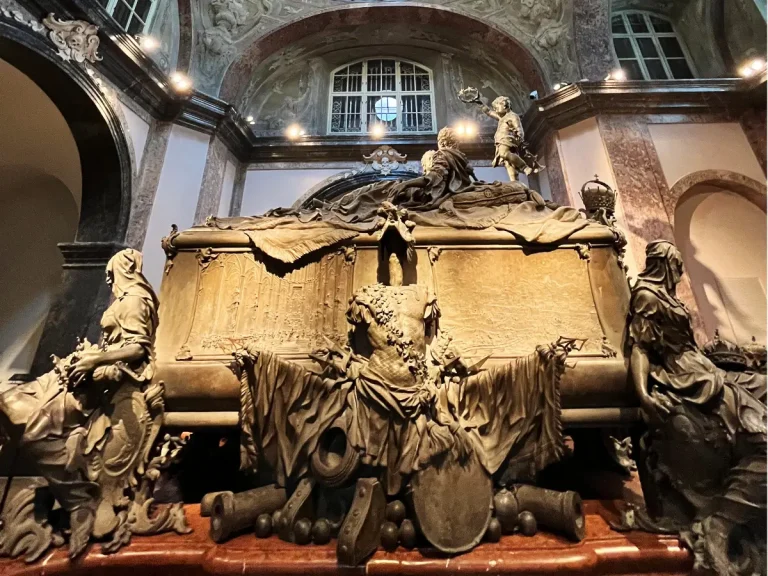
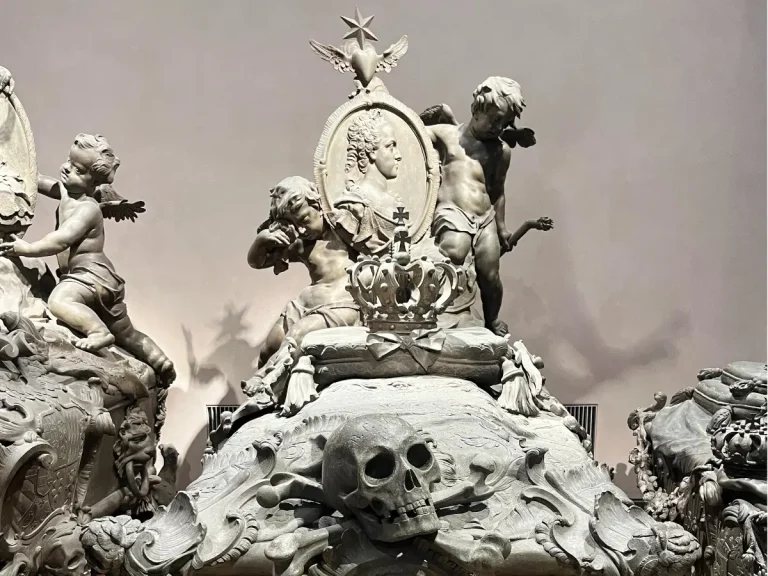
The Imperial Crypt Vienna is divided into several chambers. As soon as you walk down the steps and into the first chamber, you feel like you’re walking through an art museum of the dead. Coffins are decorated with skulls, life-size crowns and other ornate Austrian symbols.
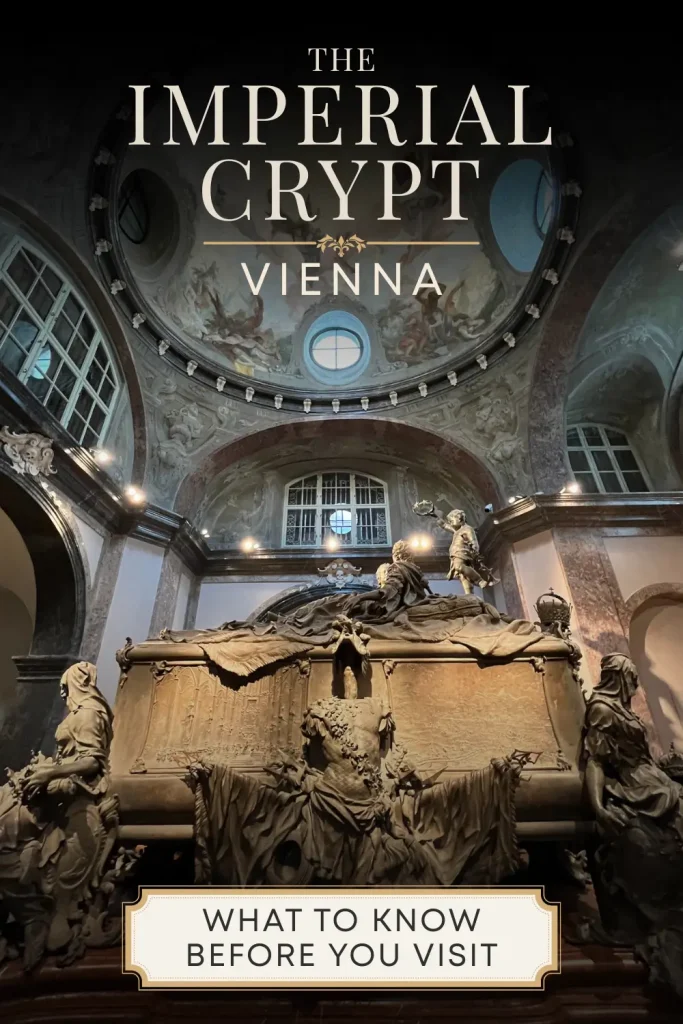
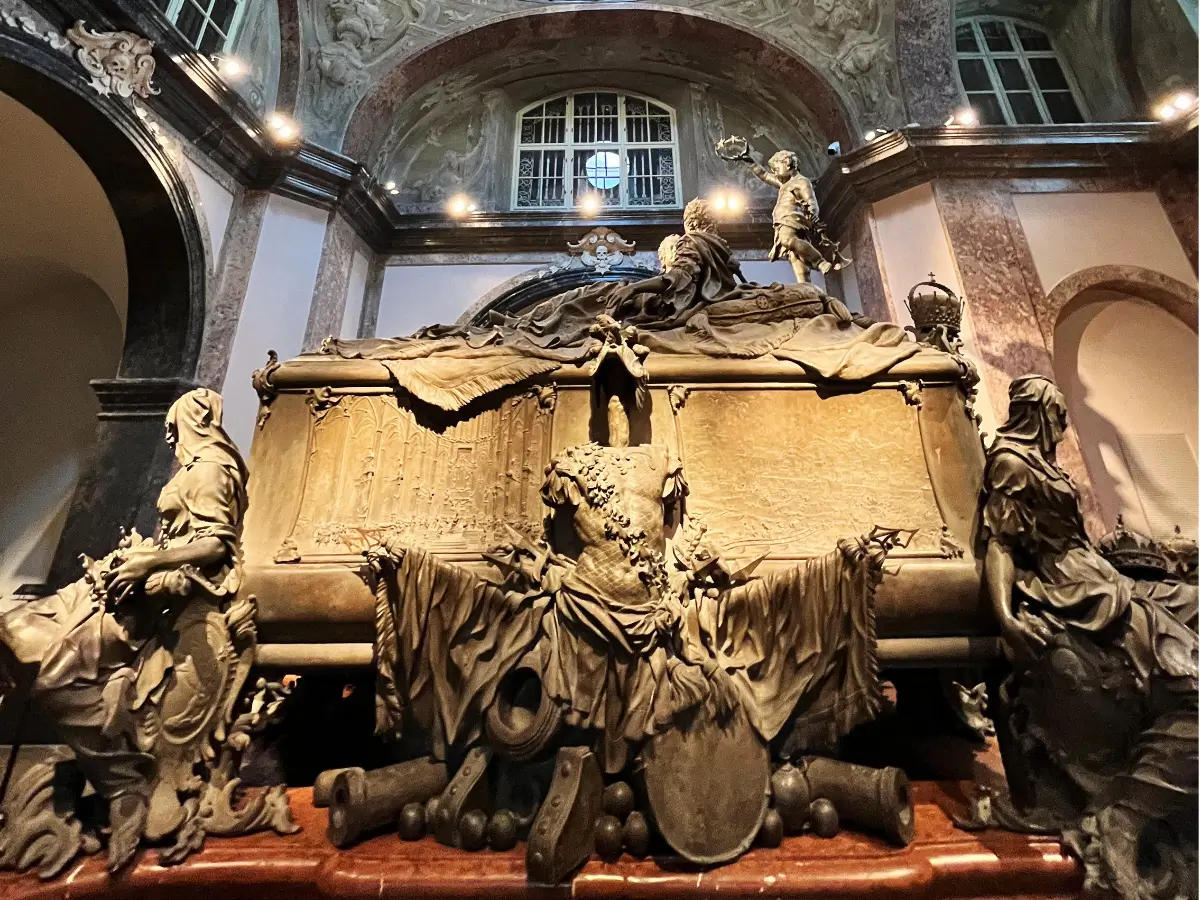
And then there’s Maria Theresa’s sarcophagus. The bronze double coffin, located in the aptly named Maria-Theresien-Gruft, is fit for a queen and a king. That’s because her husband, Emperor Francis I, is her tomb mate.
The sarcophagus is roughly the size of a small bus. That’s not an exaggeration either. It measures over 3 meters (about 10 feet) long, 2 meters (6.5 feet) wide and is topped by figures that rise 1.2 meters (about 4 feet) high.
Designed by Austrian sculptor Balthasar Ferdinand Moll, the elaborate Rococo sarcophagus took more than 20 years to complete. It even includes life-size figures of Maria Theresa and Francis I, just so there isn’t any confusion over who’s inside.
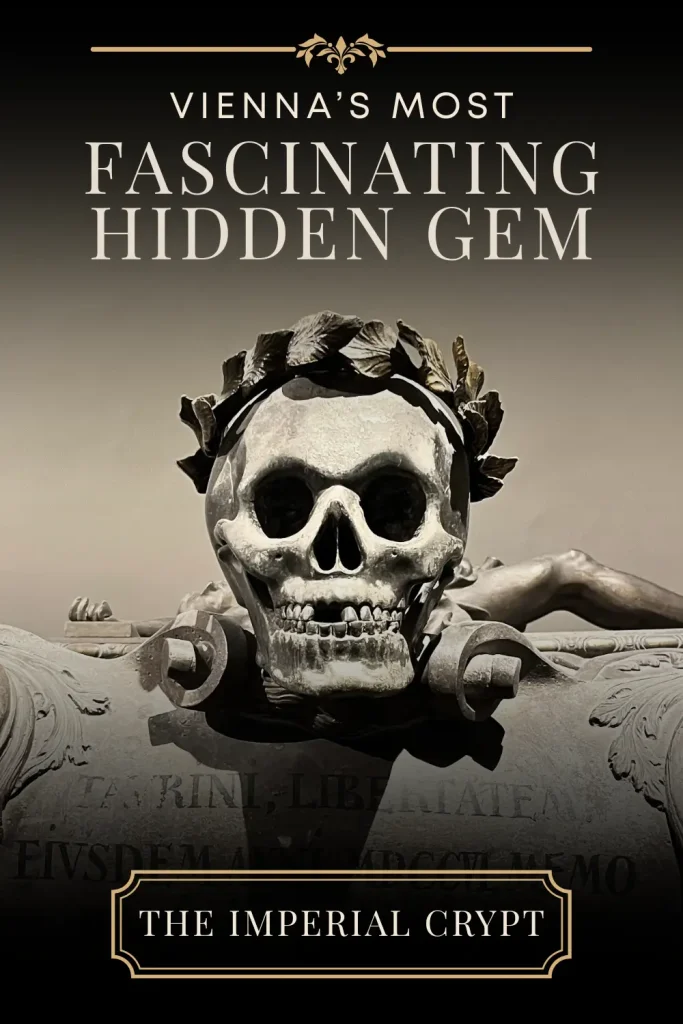
My favorite though, is Emperor Charles VI. His sarcophagus is hard to miss; it’s the one with a skull wearing the Imperial Crown of the Holy Roman Empire.
Imperial Crypt Vienna Visitor Information

Location
The Imperial Crypt is located beneath the Kapuzinerkirche (Capuchin Church) at:
Tegetthoffstraße 2
1010 Vienna, Austria
It’s right in the Innere Stadt, within easy walking distance of the Albertina, Vienna State Opera, Hofburg Palace, and St. Stephen’s Cathedral.
Opening Hours
The crypt is generally open daily from 10am to 6pm, with last entry around 5:45pm. Hours can occasionally change on religious holidays, so it’s worth checking before your visit.
Tickets
You can buy tickets at the door, but I’d recommend booking through GetYourGuide if you’re visiting during peak season or stacking multiple stops in a day. Less hassle, same experience.
How Long Do You Need?
Most people will spend about 30 to 45 minutes here. The crypt itself isn’t huge, but there are enough details packed into the tombs that history lovers could easily linger longer.
Photography
Photography is allowed inside the crypt. And yes, you will absolutely attempt to photograph Maria Theresa’s coffin in a single frame and immediately realize how enormous it actually is.
Best Time to Visit
The crypt isn’t massive, so it can feel crowded faster than you’d expect. Weekday mornings are usually the quietest. I visited in the afternoon and still found it manageable.
Why You Should Know Your Habsburgs Before You Visit
You can absolutely visit the Imperial Crypt on your own and have a ghoulishly good time.
But if you don’t know much about the Habsburgs going in, you may miss a lot of the stories that make the experience so fascinating. It’s like reading the last chapter of a book or fast-forwarding to the end of a movie.
Once you know the scandals, tragedies, assassinations, family rivalries and bizarre burial traditions attached to the names on the tombs, the Imperial Crypt comes alive.
A Vienna walking tour also helps connect the dots between the Imperial Crypt, Hofburg Palace, the Sisi Museum, and other royal sites throughout Vienna.
How to Make a Day of It
The Imperial Crypt Vienna works perfectly as part of a larger royal Vienna itinerary. The Hofburg Palace, the Sisi Museum, the Imperial Treasury and St. Stephen’s Cathedral are all within easy walking distance. If you’re planning a full royal Vienna day, my 3-day Vienna itinerary maps out how to structure your time across all of it.
Hofburg Palace and the Sisi Museum
The Hofburg and Sisi Museum pair especially well with the Imperial Crypt Vienna because they give you much more context for the people buried underground here. If you’ve just seen the tombs of Franz Joseph and Empress Sisi, seeing their apartments, personal belongings and imperial history afterward makes the entire experience feel much more connected.
The Imperial Treasury
The Imperial Treasury is located inside the Hofburg complex and is worth adding to your day. This is where you’ll find the actual crowns, robes, jewels and imperial regalia of the Habsburgs, including the crown of the Holy Roman Empire. That’s the same crown the skull on Emperor Charles VI’s coffin is wearing.
Seeing the Imperial Treasury and the Imperial Crypt on the same day creates a strangely perfect contrast. Upstairs: glittering symbols of imperial power. Underground: the elaborate tombs where many of those rulers eventually ended up.
Kapuzinerkirche
The church above the crypt is free to enter and easy to overlook. It also occasionally hosts intimate classical concerts featuring Mozart and Schubert. After spending an afternoon underground with 150 dead royals, it feels like exactly the right way to breathe some life back into your day.
St. Stephen’s Cathedral Catacombs
This is where things get slightly unhinged. St. Stephen’s Cathedral, about a ten-minute walk away, has its own catacombs tour, and the Habsburgs are involved here too.
The Habsburgs practiced a burial tradition of separating the body into three parts after death. The bodies were buried in the Imperial Crypt, the hearts were placed in the Augustinerkirche, and the internal organs were stored in copper urns beneath St. Stephen’s Cathedral.
Over 60 of those urns are still there. Including, somewhat incredibly, Empress Maria Theresa’s stomach. Some of those urns have cracked or leaked over the centuries and had to be replaced. You’re welcome for that information.
If that sounds exactly like your kind of travel experience, the St. Stephen’s catacombs are a very natural next stop. Tickets are available at the cathedral, and they only accept cash.
Want to see St. Stephen’s Cathedral without the morbid undertones? These St. Stephen’s Cathedral tours are completely organ-free.
Imperial Crypt Vienna FAQs
Here’s what most people are dying to know before visiting
Is the Imperial Crypt the same as the Capuchin Crypt?
Yes. The Imperial Crypt and the Capuchin Crypt are the same place, located beneath the Kapuzinerkirche (Capuchin Church) in Vienna.
Who is buried in the Imperial Crypt Vienna?
The crypt contains 150 members of the Habsburg dynasty, including Maria Theresa, Emperor Franz Joseph, Empress Sisi, and other Austrian royals.
How long does it take to visit the Imperial Crypt?
Most visitors spend between 30 and 45 minutes exploring the crypt, though history lovers could easily linger longer.
Can you take photos inside the Imperial Crypt?
Yes, photography is allowed throughout.
Do you need tickets in advance for the Imperial Crypt?
You can buy tickets at the door, but booking through GetYourGuide is worth considering during peak season or if you’re stacking multiple stops in a day.
Should You Visit the Imperial Crypt Vienna?
If you clicked on this post, you already know the answer. Go. And even if you’re on the fence, the crypt is a great place to cool off and escape the Viennese summer heat.
For more on planning your time in Vienna, check out my 3-day Vienna itinerary. And if you’re a fellow taphophile, or just someone who finds famous cemeteries oddly fascinating, check out my guides to the Hollywood Forever Cemetery and the Westwood Memorial Cemetery.
Pin Now, Plan Later
Save this pin for your Vienna itinerary!