This National Park is Less Than 3 Hours from LA. Here’s How to Plan the Perfect Day Trip.
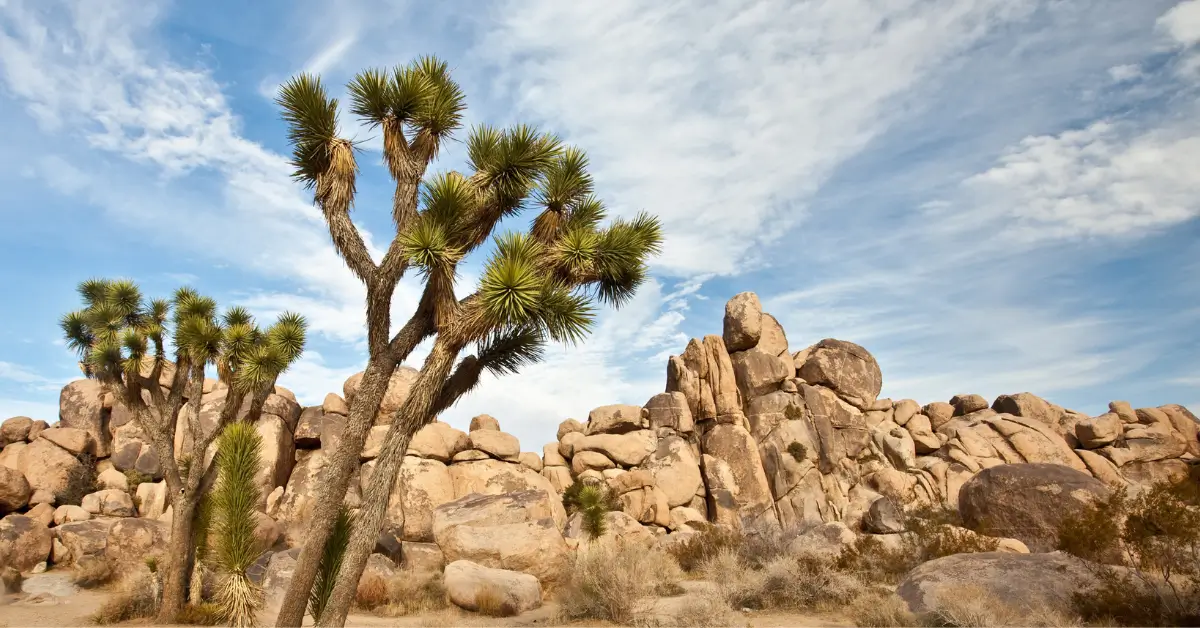
Joshua Tree National Park is less than three hours from Los Angeles and looks like another planet. If you’ve been putting off the trip because you don’t have a full weekend to spare, good news: one day is enough. This Joshua Tree day trip itinerary covers exactly what time to leave LA, which stops to hit, what to pack, and how to see the best of the park without spending half your day in a parking lot.
Jump To:
Joshua Tree Day Trip Checklist
Joshua Tree Day Trip Itinerary
What to Pack
What to Wear
Joshua Tree Day Trip FAQs
This post may contain affiliate links, meaning if you decide to make a purchase, I may earn a small commission at no additional cost to you. Read the full privacy policy here.
How to Plan a Joshua Tree Day Trip from LA
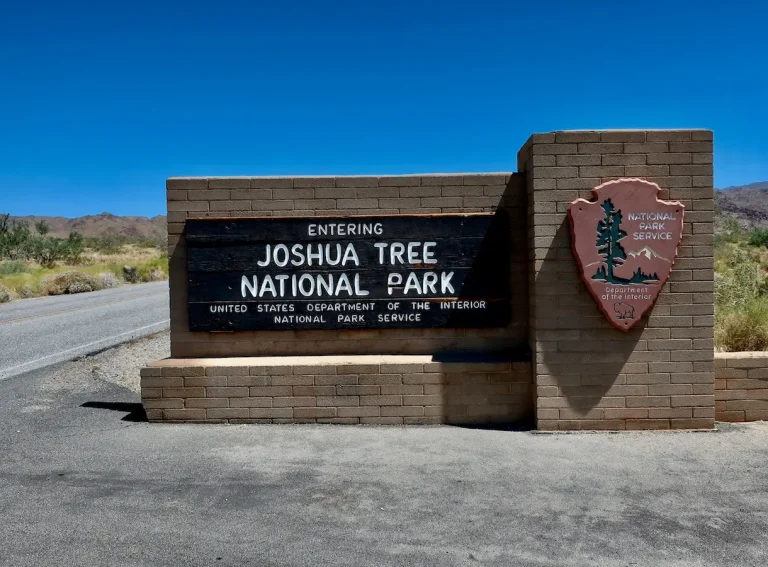
Planning a Joshua Tree day trip is less about rigid itineraries and more about nailing the basics: packing the right supplies, timing your departure and mapping out what you want to see so you’re not aimlessly driving around the park.
Explore Joshua Tree Responsibly
Remember to follow the Leave No Trace Principles when visiting Joshua Tree National Park. These seven principles help minimize your impact on the outdoors so everyone can enjoy this beautiful space for many years to come. The Leave No Trace Principles are: plan ahead and prepare, travel and camp on durable surfaces, dispose of waste properly, leave what you find, minimize campfire impacts, respect wildlife and be considerate of others. This framework can be applied anywhere, not just National Parks.
Joshua Tree Day Trip Checklist: Do These Before You Leave LA
Before you drive out to Joshua Tree National Park, mark these things off your to do list while you still have cell phone service and WiFi. These will save you a lot of time.
Make Sure Your Car is Road Trip Ready
Having to call roadside assistance is the last thing you want to do in the desert. Before you start planning your Joshua Tree day trip, make sure your car is safe to drive. This includes checking the fluid levels, tires and tire pressure, brakes, battery and lights.
Buy Your Pass in Advance
You can purchase your Joshua Tree National Park pass at Recreation.gov.
Download or Print Your Pass
I saved my pass to my phone and printed a copy just in case.
Download the Joshua Tree Map from the NPS app
A lot of 3rd party apps, which include trails and hike details, aren’t accurate or up-to-date. The NPS app is free and updated.
🧭 Navigation Tip
Not an expert map reader? Same. If you’re using the NPS app map to navigate the park while driving, turn your phone upside down. This will give you a more accurate view of the direction you’re going in.
Plan Your Route
Joshua Tree National Park is about the size of Rhode Island. Planning what you want to see before you get there will help you maximize your time in the park and keep you from wasting gas.
Pack Food and Water
There aren’t any food services or stores inside Joshua Tree National Park. If you plan on eating during the day, you’ll either have to bring your own or leave the park. Check out my Joshua Tree Day Trip packing list for inspiration.
Fill Up with Gas
Enter the park with a full tank of gas. Just do it.
⛽ Gas Tip
Gas is more expensive the closer you get to the park. I stopped at the ARCO Station in Yucca Valley and the gas cost 50 cents less per gallon.
One Day in Joshua Tree: A Complete Itinerary
The beauty of a Joshua Tree day trip is that you can actually see the park’s greatest hits without feeling rushed, you just have to be strategic about it. Here’s the exact order I visited each stop in the park.
Joshua Tree Day Trip Fast Facts
🚗 Drive Time: 2.5 to 3 hours (depending on traffic)
⏰ Departure Time: Before 6:00 a.m.
🛣️ Best Route: I-10 East to CA-62 East
🧭 Park Entrance: North Entrance (Twentynine Palms)
Skull Rock & Elephant Rock
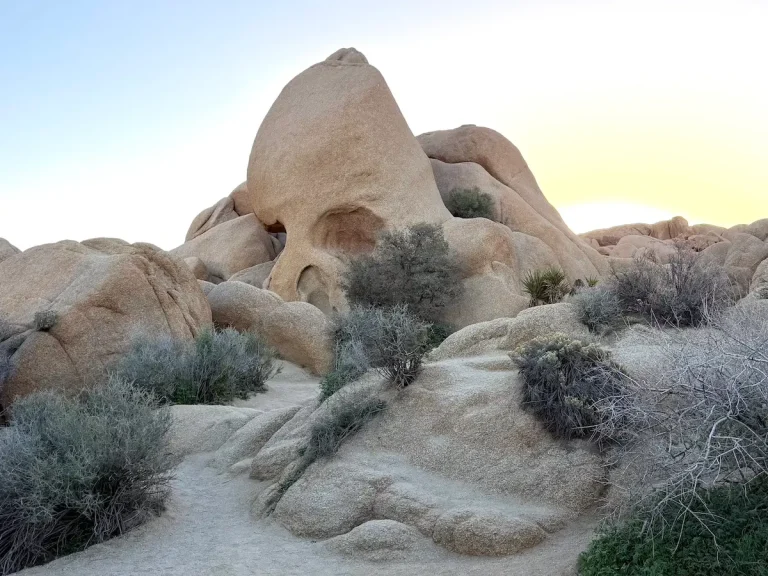
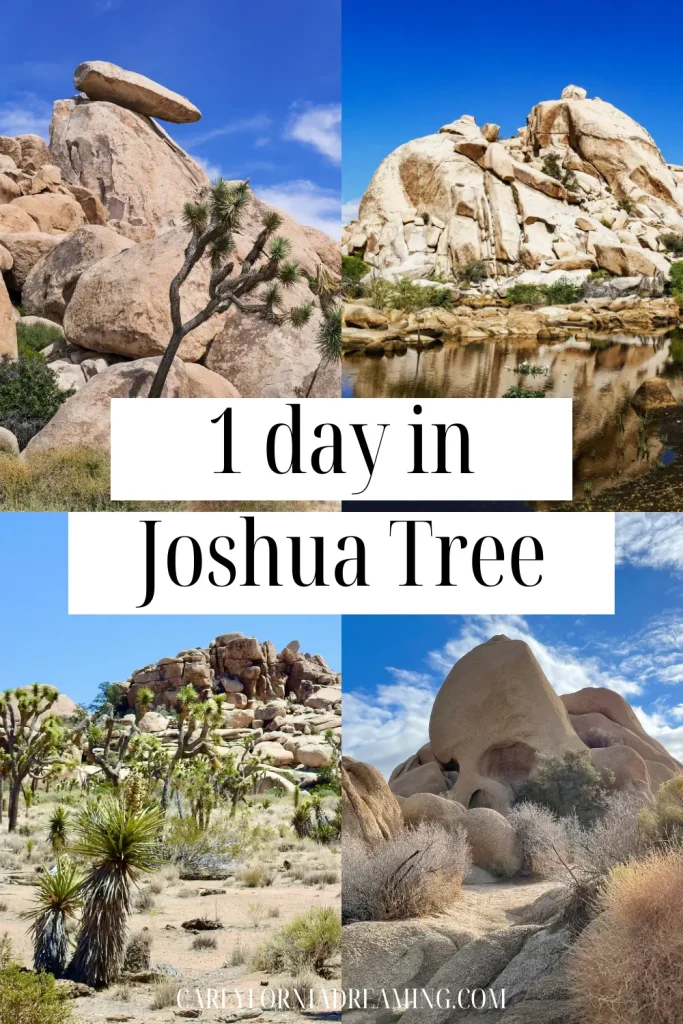
Skull Rock is one of the more popular sights, which means lots of crowds. If you enter from the North Entrance in the morning, you’ll pretty much have it all to yourself. It’s also a good place to watch the sunrise.
Discovery Trail & Face Rock
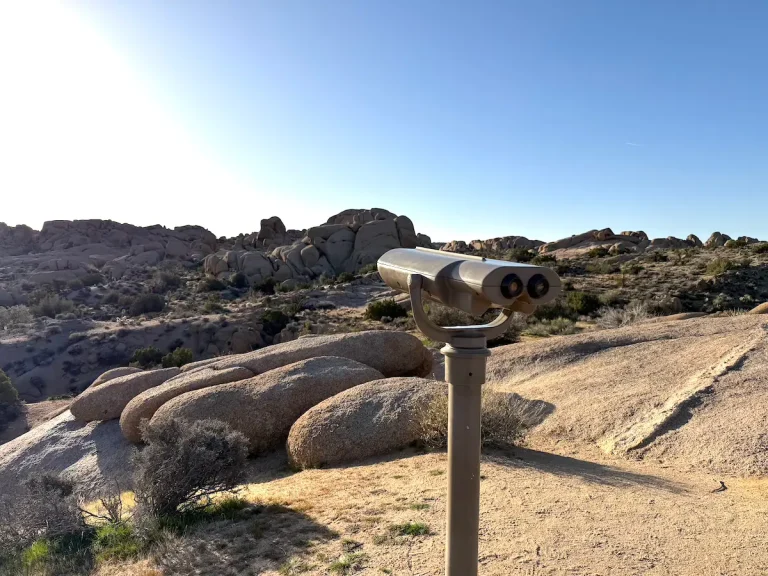
Across the road from Skull Rock is the Discovery Trail. This easy, less than one mile loop takes you through the sandy washes, boulder piles and rock formations. There’s also a lookout where you’ll get views of Face Rock, Skull Rock, Elephant Rock and Jumbo Rocks. If you want to explore even more, the Discovery Trail connects to Face Rock and Split Rock Trail. Between Skull Rock and the Discovery Trail, plan to spend about an hour and fifteen minutes.
Bighorn’s Domain
You won’t find it on the map, but if you drive past Geology Road and Sheep’s Pass, there will be a small pull off on the road to park your car. It’s a quick stop, about 15 minutes, but worth it. And you’ll probably be the only one there. So, why did I stop here? Because the rocks looked really cool and otherworldly. According to the sign at the trailhead, the 250 bighorn sheep that live in Joshua Tree National Park think they’re pretty cool, too.
Hall of Horrors
Don’t let the name fool you. There’s nothing scary about the Hall of Horrors except maybe the parking lot, which fills up fast in the afternoon. The trail is a popular spot for scrambling and rock climbing, but the hidden gem here is the slot canyons. They’re easy to miss (I missed them) so here’s what to look for: head to the backside of the large rock formation at the start of the trail. Plan to spend about 30 minutes here, more if you find the slot canyons.
Cap Rock
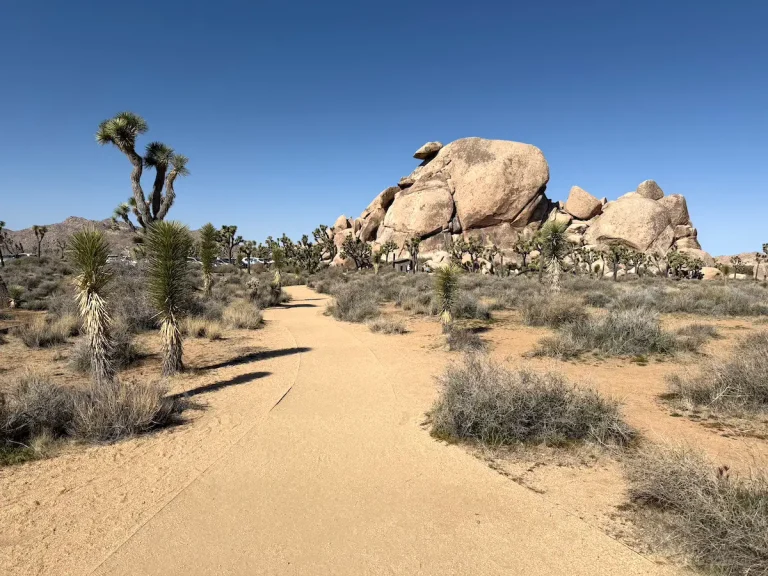
At less than half a mile, the Cap Rock trail is one of the easiest trail loops at Joshua Tree National Park. It’s also centrally located in the park, making a great halfway point for your Joshua Tree day trip. If you’re looking for a place to stop and have lunch, there are picnic tables and grills located near the parking lot, as well as a restroom. Budget about 30 minutes for the trail, more if you’re eating.
Barker Dam
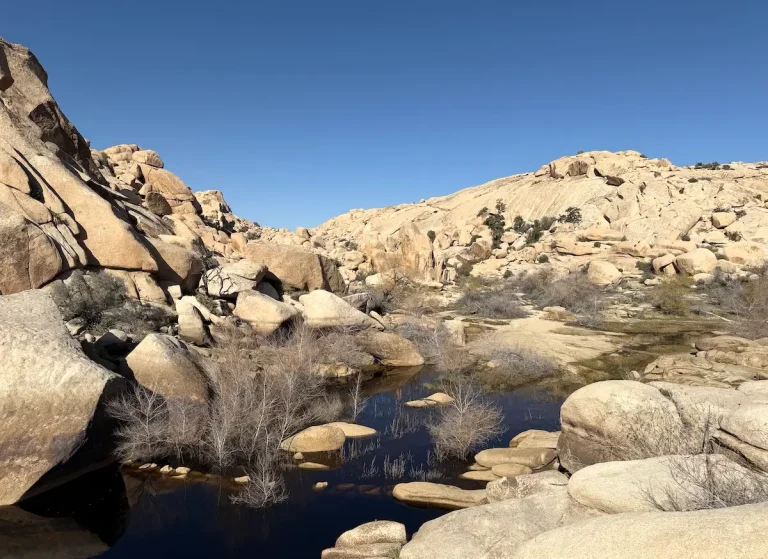
The Barker Dam Trail was probably one of my favorite loops in Joshua Tree. To quote one of my favorite characters from SNL: it has everything. Scenic views, rock formations, Joshua trees and, as the name suggests, the Barker Dam. The 1.1 mile loop takes about 45 minutes at an easy pace. And near the end you can see rock art or petroglyphs that date back 2,000 years.
Keys Ranch
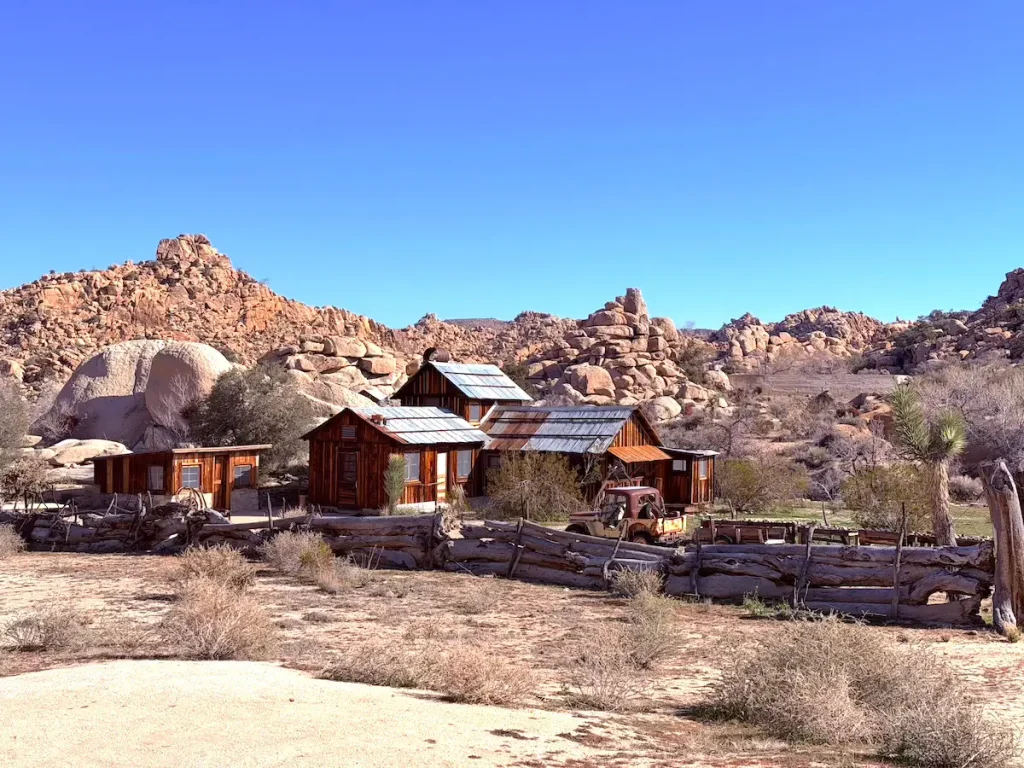
I’m a sucker for a guided tour. So when I saw the park offered a guided walking tour of Keys Ranch, I had to book it. Led by a park ranger, this 2-hour tour takes you to the Keys family ranch. This area is off-limits to anyone who doesn’t have a tour ticket, so it kind of makes you feel special. Tickets cost $20 and tours are only available from October to May. If the Keys Ranch tour is available when you’re at Joshua Tree, you should definitely get tickets.
What to Pack for a Joshua Tree Day Trip
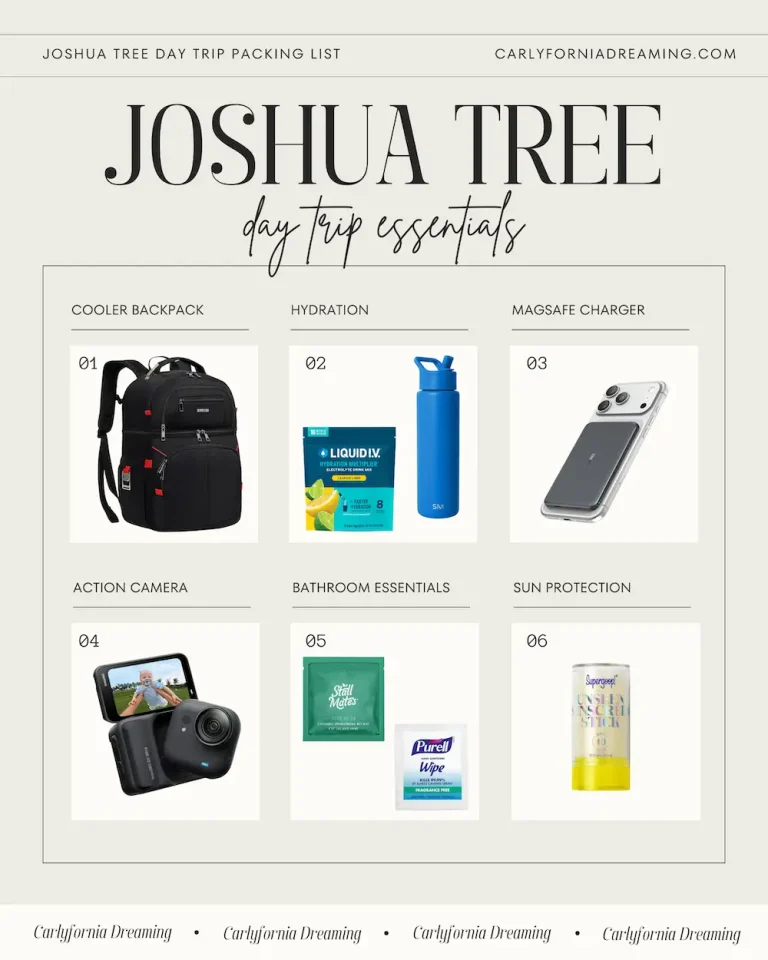
Insulated Cooler Backpack
Since we brought our own lunch and drinks, we needed them to stay cold. I think regular coolers are clunky and take up too much room, which is why I prefer an insulated cooler backpack.
Not only is it lightweight and easy to carry, but it also comes with a lot of storage for utensils, napkins and other food that doesn’t need to be kept cold. And, most importantly, it keeps everything inside the insulated compartment cold.
Water
There is no potable water inside Joshua Tree National Park, so you have to bring your own. (FWIW, there are fill stations at the various park entrances, but if you’re only going for a day, it’s not the best use of your time.) I filled up my stainless steel water bottle before I left, and I put a couple of extra water bottles in my insulated backpack.
To stay extra hydrated and to combat sausage fingers, I also brought my favorite: Liquid IV. (I love the Lemon Lime flavor!) If you’re someone like me who is terrible at drinking water, this is a must when you travel.
Food & Snacks
Since there aren’t any restaurants or grocery stores inside Joshua Tree National Park, you’ll need to bring your own. We ordered sandwiches the night before and had lunch at one of the picnic tables at Cap Rock. I also packed my favorite snack: NuGo Protein Bars.
Sunscreen
Never underestimate the power of the sun, especially in winter. I applied my favorite SPF 40 sunscreen and wore a hat, but still managed to get some sun on my face.
Toilet Paper
All of the bathrooms I used in Joshua Tree National Park had toilet paper; however, that may not be the case when you visit. (Park supplies can run low.) I packed plenty of Stall Mates so I didn’t have to ask “Can you spare a square?”
Hand Sanitizer
While the toilet paper may have been plentiful, bathroom sinks — and running water in general — are not. (The toilets in the park are vault toilets.) I brought my favorite hand sanitizer wipes to keep my paws clean. Bottled hand sanitizer would work just as well.
Phone Charger
Halfway through the day my iPhone battery was lower than 60%. (I expected that since I started using it at 4:00 a.m.) I only had to use my magsafe portable phone charger once and it was good to go until I got home.
Camera
While I used my phone for most photos, I also brought along my Insta360 Go Ultra to capture 4K footage while driving through the park. And when I wanted to go hands-free, I embraced my inner nerd and used the hat clip attachment. This came in handy while climbing the rocks at Hall of Horrors.
First Aid Kit
Ever since I cut my toe open a few years ago, I keep a first aid kit in my car. As my parents always say: “You’d rather have it and not need it, than need it and not have it.” And this is very true when you’re around areas with cacti.
What to Wear to Joshua Tree National Park

Not sure what to wear to Joshua Tree? Here’s how I stayed warm, cool and comfortable in the desert. Keep in mind, I visited Joshua Tree in late January, so this is based on a winter trip. If you’re going in spring or fall, you can probably skip the heavy outer layer but the rest holds.
Layers
Joshua Tree National Park may be in the desert, but that doesn’t mean it’s always hot. If you arrive at the park early, it will be chilly. When I visited the park in late January, temperatures ranged between the low 40s to 50s at sunrise. I only needed my Eddie Bauer Cloud Cap Insulated Trench for the first hour or so, but I’m still glad I brought it.
For most of the day, I got by wearing my Paka Ultralight CoolMax Sweater that I bought in Peru. By the afternoon, it was basically t-shirt weather (think low 70s). I swapped my sweater for a lightweight denim shirt over my Paka Essential Tee.
The trails are dusty, so I would recommend wearing long pants or leggings. (I wore Old Navy StudioSmooth Leggings.)
Hiking Shoes
While most of the hikes in Joshua Tree are easy, you’ll still want to wear sturdy hiking shoes. I busted out my Merrell Moab Speed 2 Hiking Shoes that I wore in Peru and they handled the different terrains with ease.
Sun Protection
Wearing a hat and sunglasses are essential in Joshua Tree, regardless of what season it is. When I went in late January, it was unusually warm and I was glad I wore a hat. (I learned my lesson after not wearing one in Cusco.)
Joshua Tree Day Trip FAQs
As someone who had only been to one national park, I had a lot of questions before my Joshua Tree day trip. Here are some of the most frequently asked questions about Joshua Tree National Park.
How far is Joshua Tree National Park from Los Angeles?
Joshua Tree National Park is about 130 miles from Los Angeles, making it a 2.5 to 3-hour drive depending on traffic. The most popular route to get there is the I-10 East to the CA-62 E. (You can also take the I-10 East to the CA-60, but you’ll eventually be dumped back onto the 10.)
When should you leave LA for Joshua Tree?
If you want to beat the crowds and experience less traffic, leave early. (Day of the week doesn’t matter. LA traffic on the 10 East during the week, especially in the morning, is the tenth circle of hell.) I left from mid-city Los Angeles at 4:00 a.m. and was inside the park before 7:00 a.m.
What time should you arrive at Joshua Tree?
If you’re planning a Joshua Tree day trip, you should arrive as early as possible. This will not only let you see more of the park, but it will be less crowded and easier to find parking. I arrived before 7:00 a.m., and there were hardly any people on the North side of the park. If you’re not an early bird, you should aim to arrive no later than 8:00 or 9:00 a.m.
How much does it cost to enter Joshua Tree National Park?
The entrance fee is $30 per vehicle for a 7-day pass. The fee covers everyone in your car, so you don’t have to buy multiple passes. You can enter and exit the park as much as you want during those 7 days.
How do you buy a pass to Joshua Tree National Park?
There are two ways to buy Joshua Tree National Park passes: in-person or online through Recreation.gov. If you plan to arrive early, buying your pass online is the best option. Just make sure to download and save your pass to your phone or print your pass — or both! You’ll most likely have to show your pass when you exit the park. If you don’t have it, you’ll have to pay the fee.
What is the best entrance to use for a Joshua Tree day trip?
There are three entrances to Joshua Tree National Park:
- The North Entrance (Twentynine Palms)
- The South Entrance (Cottonwood)
- The West Entrance (Joshua Tree Village)
The West Entrance is the most popular, which also makes it the most congested. I used the North Entrance from Twentynine Palms and there was maybe one car ahead of me. Because I got there early, I also chose this entrance so I could go across the park and hit the busier stops, like Skull Rock, before the crowds. I highly recommend this strategy, of course, it all depends on what you want to do and see.
Is there cell phone reception in Joshua Tree National Park?
Cell phone reception inside Joshua Tree National Park ranges from non-existent to the occasional one bar. But it’s mostly the latter. To make sure you can access the Joshua Tree National Park map from your phone while in the park, download it from the app before you arrive.
Is Joshua Tree pet friendly?
While pets are allowed only in parking areas, campgrounds, and along paved roads, they are not allowed on Joshua Tree National Park hiking trails. I saw a lot of people break this rule. Please don’t be one of those people. There’s a reason why this rule exists.
What is the best time of year for a Joshua Tree day trip?
Fall and spring (October through April) are the sweet spot. I went in January and the weather was perfect. Temperatures are manageable, the light is stunning, and you’re not in any danger of heat-related problems. Just plan for chilly mornings and wear layers. Summer is genuinely risky, with midday temps that regularly hit triple digits and NPS heat advisories to match. If summer is your only option, arrive at sunrise and be back in your car by noon. Also make sure your car is in good condition before you go. Breaking down in the desert in summer is not the situation you want to be in.
Is One Day Enough for Joshua Tree?
As long as you leave early and come prepared, one day is enough time to see the best of Joshua Tree National Park. It’s a long day, but you’ll drive home with a full camera roll and already planning your next Joshua Tree day trip.
Ready to Plan your Joshua Tree Day Trip?
Save this pin for your Joshua Tree National Park itinerary!