The 5-Day London Itinerary That Actually Makes Sense
Planning a trip to London? This 5-day London itinerary helps you see the best of the city without wasting time or overplanning.
London is one of those cities that seems complicated until you’re actually in it. The Tube map looks intimidating, the city is massive and the list of things to see feels endless. But London is surprisingly walkable and easier to navigate than it gets credit for, which makes five days more than enough time to do it right.
This London itinerary is built around themed days, so you’re not zigzagging across the city or wasting time on the Tube. You’ll cover the royal palaces, the darker side of London’s history, a WWII-focused day, a day trip outside the city, and the iconic Westminster landmarks.
This post may contain affiliate links, meaning if you decide to make a purchase, I may earn a small commission at no additional cost to you. Read the full privacy policy here.
How to Plan Your London Trip
Time Needed: 5 days
My Hotel Recommendations: The Dixon, Tower Bridge and Hotel Xenia, Kensington
Best For: First-time visitors, royal history lovers and World War II history buffs
Highlights:
What to Book Ahead: If you’re visiting during the summer, Buckingham Palace State Rooms tickets sell out quickly. The Tower of London After Hours Tour, Crown Jewels Early Access Tour and Big Ben tour also tend to book up well in advance.
Jump to:
How to Get Around London
Day 1: A Tale of Two Palaces
Day 2: The Dark Side of London
Day 3: World War II London
Day 4: London Day Trips & Museums
Day 5: Changing of the Guard & Westminster
Where to Eat
Where to Stay
London FAQs
How to Get Around London
Most tourists seriously underestimate how big London is. I walked nearly 30,000 steps on my first day, and I wasn’t even trying. The good news is that London is easier to navigate than it looks. I say that as someone who lives in LA who doesn’t regularly use public transportation. So if I can figure out London’s public transportation system, so can you.
Heathrow to Central London: What’s the Best Way to Get There?
The cheapest and best way to get from Heathrow to London is the Elizabeth line. It runs directly from Heathrow into central London in about 30 to 40 minutes depending on your stop, runs frequently and costs a fraction of what the Heathrow Express charges.
The Heathrow Express is faster by about 15 minutes, but the price difference is hard to justify when the Elizabeth line gets you there just as comfortably.
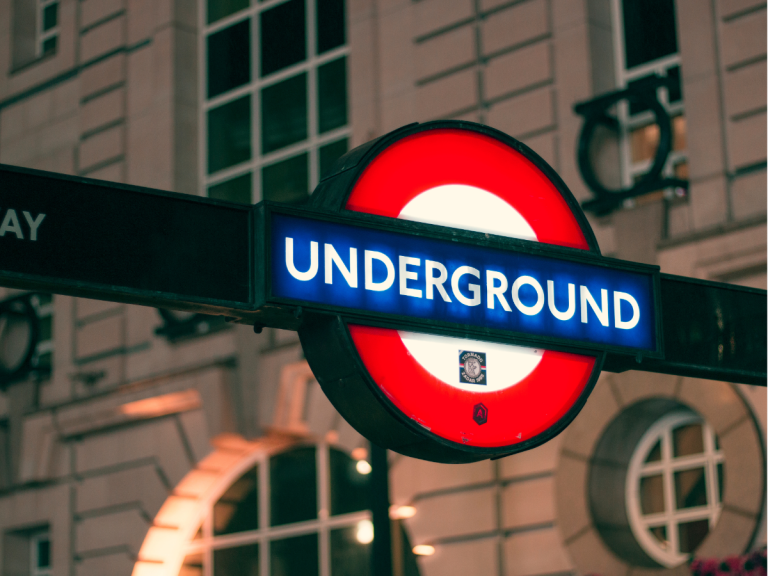
How to Use the London Underground (The Tube)
The London Underground, or more commonly referred to as the Tube, is your best friend, especially on Days 2, 3 and 5 of this London itinerary. Days 1 and 4 are mostly on foot, so pack comfortable shoes
Here’s a quick Tube stop reference for this London itinerary:
Try to avoid the Tube during rush hour if you can help it. Weekday mornings between 8:00 and 9:30 a.m. and evenings between 5:00 and 7:00 p.m. are brutal. The cars are packed and the platforms are crowded.
One more thing that will save you from getting judged by every Londoner around you: stand on the right side of the escalator, always. The left side is for people walking. This is an unwritten rule and it is taken very seriously.
The Oyster Card vs. Contactless Payment
Skip the Oyster Card. Contactless payment is the easier option. Just tap your phone or credit card as you enter and exit each station and the system automatically caps your daily fare.
You’ll want to tap the same card or device every time. The system tracks your daily cap per payment method, so switching between your phone and your physical card mid-day means you’re starting the cap over.
London Itinerary Day 1: Kensington & Buckingham Palace
If you’re going to spend your first day in London doing anything, spending it surrounded by royal history is a pretty good call. Day 1 is all about the palaces, and these two couldn’t be more different from each other.
Kensington Palace
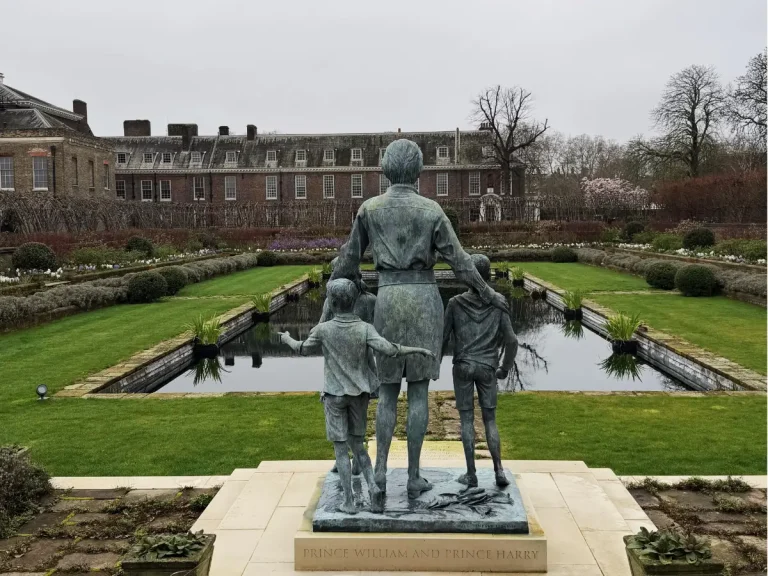
Start your morning at the childhood home of Queen Victoria, the former home of Princess Diana, and the current residence of Prince William and Princess Catherine. I recommend getting there right when it opens. It’s quiet, uncrowded, and you can take your time instead of moving room to room without hoards of people.
The audio guide walks you through the State Rooms, the King’s Gallery, and the King and Queen’s staircase, but the highlight is the Jewel Room. If you were planning to skip this because you’re already seeing the Crown Jewels at the Tower of London, don’t. You can get much closer here, and you can actually take photos.
Outside, don’t miss the Sunken Garden and the Princess Diana memorial statue. You don’t need a ticket for this part, so it’s worth a quick stop either way.
A lot of reviews online will tell you Kensington Palace isn’t worth it. Don’t believe them. It was one of my favorite palaces in London and I’d go back.
If you want to go inside, booking ahead will help you keep your morning on track.
After Kensington Palace, walk through Hyde Park to get to Buckingham Palace. It’s about 45 minutes on foot and it’s a genuinely lovely walk. Take it slow. And if you’re an elder Millenial like me, don’t miss the Peter Pan statue from “Hook.” It’s bangerang!
Buckingham Palace
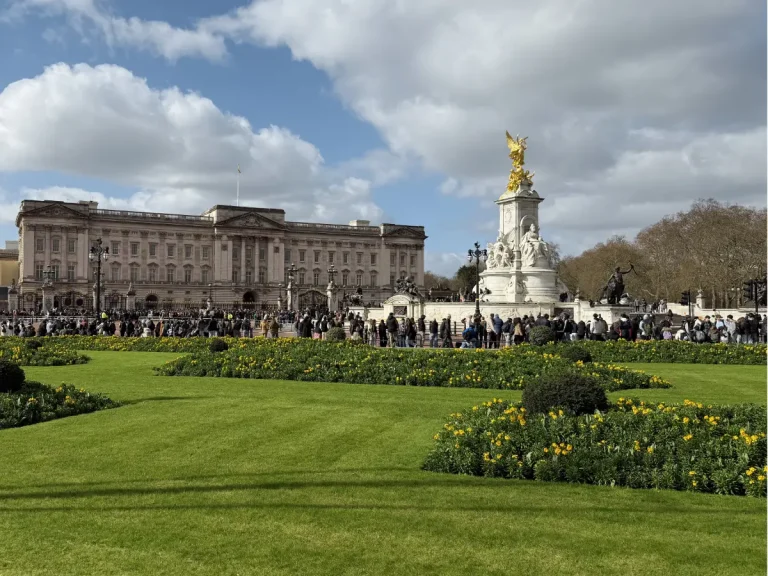
If you’re visiting London in the summer, this is one of the few times you can actually go inside. The State Rooms are open from July through late September and cover 19 rooms including the Throne Room and the Picture Gallery. Budget 2 to 2.5 hours and book tickets in advance and they will sell out.
Tickets are limited to a short window each year and tend to sell out, especially for morning entry times. Check availability early so you can plan your day around it.
Visiting outside of summer? The East Wing occasionally opens for small group winter tours that include access to the Centre Room and the famous balcony. Tickets go on sale through the Royal Collection Trust and they go fast. You can get on their email list to be the first to know when tickets are released.
If you can’t get tickets or wandering around old palaces aren’t your thing, the area surrounding the palace is still worth your time year round. The Victoria Memorial, the Mall and St. James’s Park are all free to see and explore.
For a more in-depth look at Royal London, including both palaces, check out my full guide to the best royal things to do in London.
London Itinerary Day 2: Tower of London, Tower Bridge & Jack the Ripper
Day 1 was all about the glamour of the monarchy, Day 2 leans into the darker side of it. This is a full day on your feet, so wear comfortable shoes and pace yourself. You’ll want to save some energy for the evening.
Tower of London
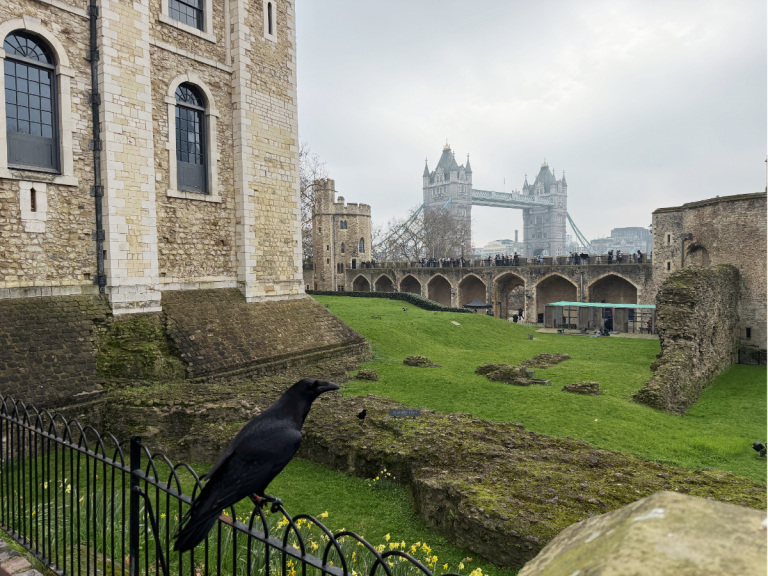
The Tower of London has seen some things. It’s been a royal palace, a prison, a place of execution and home to the Crown Jewels, all within the same walls.
There are two ways to experience the Tower of London: the Early Access tour in the morning, which gets you to the Crown Jewels before the crowds arrive, or the VIP Closing Ceremony tour at night, which gives you the Tower almost entirely to yourself with a Beefeater as your guide.
I did the VIP Closing Ceremony tour on the night of Day 1 and the Early Access tour on Day 2.
If you’re trying to decide, it really comes down to what kind of experience you want. Early access is more about efficiency and beating the crowds. The evening tour feels more exclusive and a lot more memorable.
For a full breakdown of which tour is right for you, check out my complete Tower of London tours guide.
Tower Bridge
After the Tower of London, walk across Tower Bridge. The views of the Thames are worth slowing down for, but if you want to go a step further, the glass walkway on the upper level is worth it.
You’re looking straight down to the river below, which is either thrilling or slightly unsettling depending on how you feel about heights. You’ll also get some of the best views of St Paul’s Cathedral and The Shard.
Since you’re already on that side of London, it’s an easy add-on and doesn’t take much extra time.
To get to the top, you can take the elevator or the stairs. I took the stairs, which ended up being good practice for climbing the 334 steps to Big Ben later in the trip.
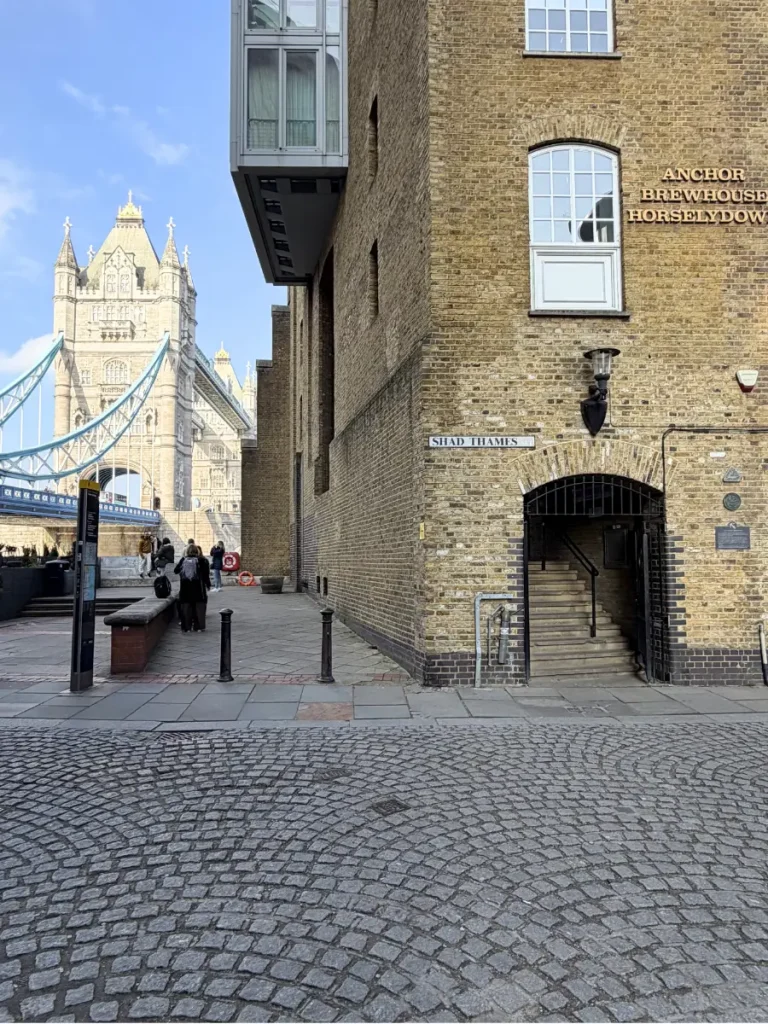
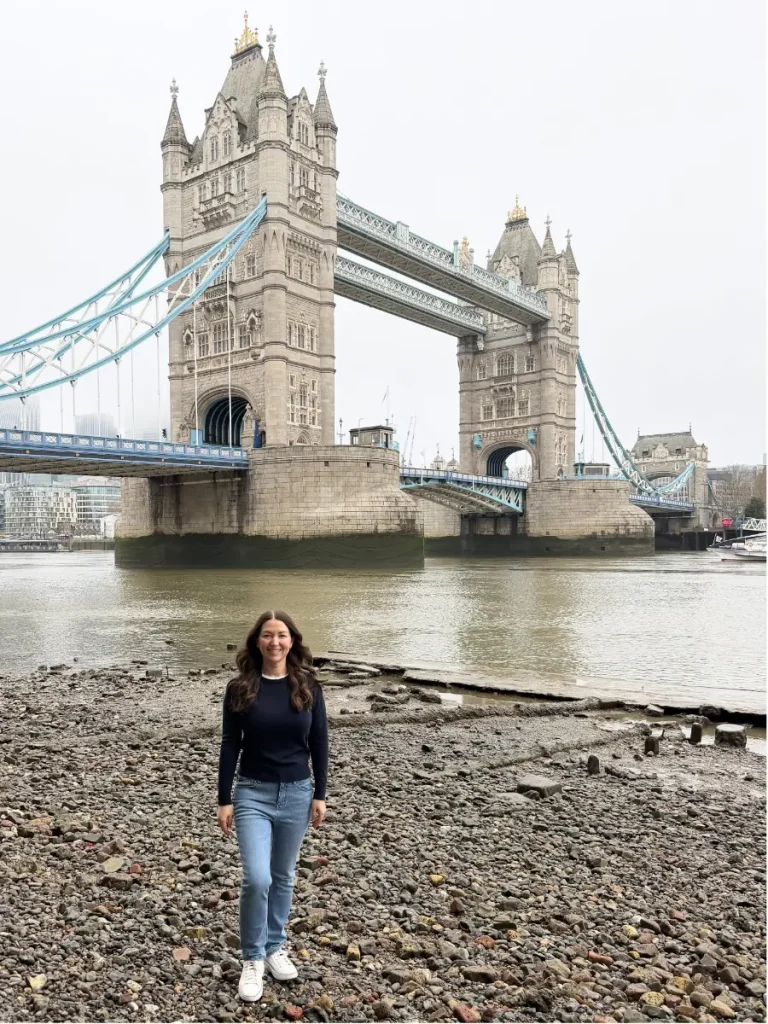
After you walk through the Engine Rooms, turn right and stop by Horsley Down Steps. It’s one of the best spots to get a crowd-free photo of the bridge, especially at low tide. If you only take one photo all day, take it there.
Jack the Ripper Walking Tour
End the day in Whitechapel with a Jack the Ripper walking tour. It’s a fitting close to a day that’s been heavy on dark history, and the area at night has a completely different energy from the rest of London.
I took this Jack the Ripper tour with London Walks and it was everything I wanted and more, not to mention it’s very affordable.
You don’t have to book in advance, but it’s worth reserving your spot as it’s one of their more popular tours.
London Itinerary Day 3: Churchill War Rooms & Bletchley Park
Day 3 is for the history nerds, and I mean that as the highest possible compliment. This is probably my favorite day on the entire itinerary.
Churchill War Rooms
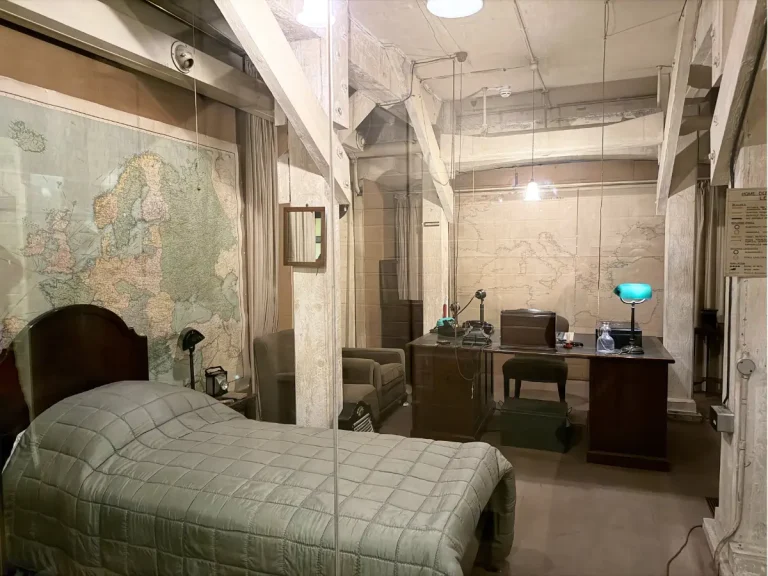
The Churchill War Rooms may be one of the most underrated experiences in London. If you’re even the slightest bit interested in World War II history, this needs to be on your London itinerary.
The Churchill War Rooms are exactly what they sound like: the underground bunker where Winston Churchill and his Cabinet directed Britain’s war effort during World War II. The rooms have been left almost exactly as they were when the lights went off in 1945, which makes the whole thing feel less like a museum and more like everyone just stepped out for lunch and never came back.
The guided tour the museum offers before it opens to the public is absolutely worth it. Having someone walk you through what was happening above ground while you’re standing in the rooms where those decisions were made adds a layer you don’t really get from the audio guide. It also gets you in before the crowds, which makes the whole experience a lot more enjoyable.
The War Rooms are in Westminster, right near the Houses of Parliament, so the location works perfectly for this itinerary.
Bletchley Park
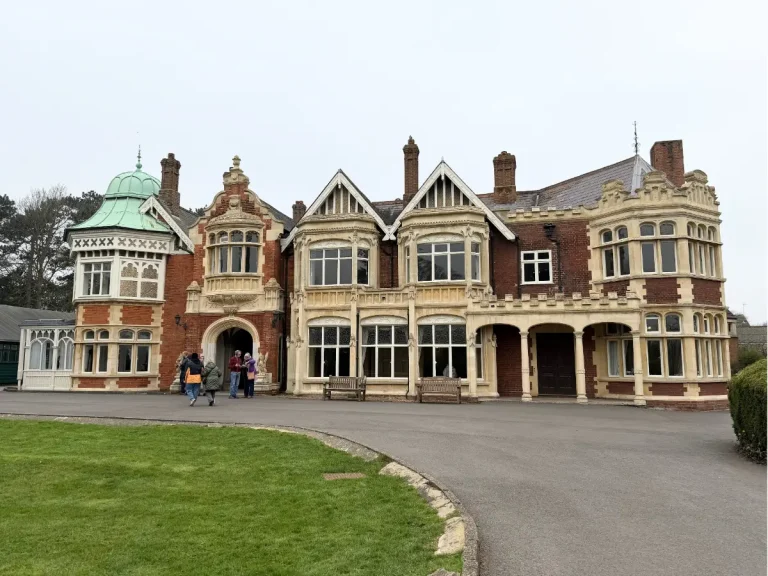
From the Churchill War Rooms, make your way to London Euston Station and take the train to Bletchley. The journey takes about 50 minutes and trains run regularly, so you don’t need to overthink the logistics. From Bletchley station it’s a short walk to the site.
Bletchley Park is what I’d consider a hidden gem. It’s been on my “to visit” list ever since I listened to “The Rose Code” audiobook.
It’s where the British government assembled some of the greatest mathematical and analytical minds of the 20th century, like Alan Turing, to crack Nazi Germany’s Enigma code. The work done at Bletchley is widely credited with shortening the war by several years.
Give yourself at least half a day because there’s more to cover than it looks like from the outside. The exhibits are well done and genuinely engaging even if you’re not a WWII buff going in. If you’ve seen the film “The Imitation Game,” a lot of what you’ll see will look familiar, and a lot of it will also make you realize how much the film left out.
You can absolutely do this trip on your own (I did), but it does take a bit of coordination with train times and tickets.
Trains back to London run regularly from Bletchley station, so getting back at the end of the day is easy.
London Itinerary Day 4: Choose Your Own Adventure
Day 4 is the most flexible day on this London itinerary. Pick the option that matches your energy level and what you haven’t gotten enough of yet. If you’re on the fence, Windsor is easy to do on your own; the Cotswolds are a lot easier with a tour.
Option A: Windsor Castle
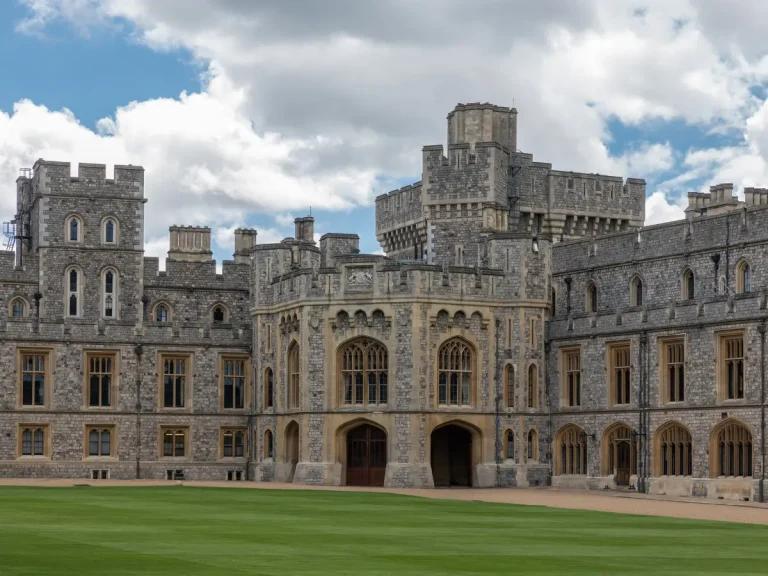
Windsor Castle is the world’s oldest and largest occupied castle, and it’s only about 30 to 40 minutes from London Paddington by train. It’s where the Royal Family actually spends weekends, which makes it feel more lived-in than Buckingham Palace.
The State Rooms are impressive, and St George’s Chapel is genuinely stunning. Ten monarchs are buried there, including Queen Elizabeth II and Henry VIII, which is worth the visit on its own.
You can absolutely do Windsor on your own. Take the train from Paddington to Windsor & Eton Central, walk up the hill, and book your entry ticket in advance.
If you’d rather keep things simple or see more in one day, there are tours that bundle Windsor with places like Stonehenge or Bath, which take care of the planning for you.
Option B: The Cotswolds
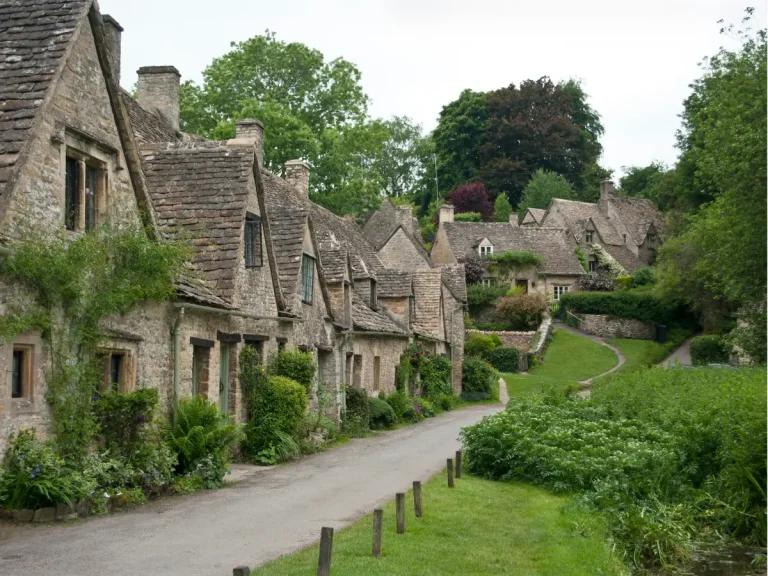
The Cotswolds are everything the English countryside is supposed to look like—honey-colored stone cottages, rolling hills, village pubs, and roads so narrow you’ll wonder how anyone drives on them. It’s a completely different pace from London and a good option if you’re starting to feel city fatigue by Day 4.
Unlike Windsor, the Cotswolds are harder to navigate without a car. You can piece it together with trains and taxis, but it takes time and you won’t see nearly as much.
A small group tour from London is the easiest way to do it. Most tours hit the highlights: Bourton-on-the-Water, Burford, and a few smaller villages that look almost too perfect to be real and handle all the transportation for you.
If this is something you want to do, a tour is the simplest way to make the most of your day.
Option C: Museum Day
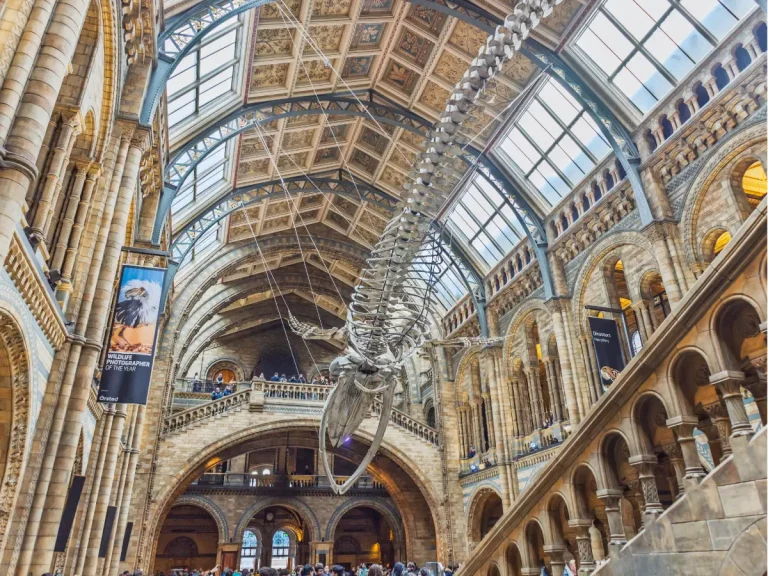
If you’d rather stay in the city, South Kensington has three of the best free museums in the world within walking distance of each other:
Each one could easily fill a full day on its own, so don’t try to do all three.
One thing to know: the Natural History Museum is free, but it requires a timed entry ticket booked in advance. Don’t show up assuming you’ll get in.
Pick one or two, grab lunch in between and treat this as a slower reset day before Day 5.
London Itinerary Day 5: Changing of the Guard, Big Ben & Westminster
Day 5 is your victory lap. You’ve done the palaces, the dark history, the WWII sites and a day trip. Today is about the iconic stuff that ties it all together.
Changing of the Guard
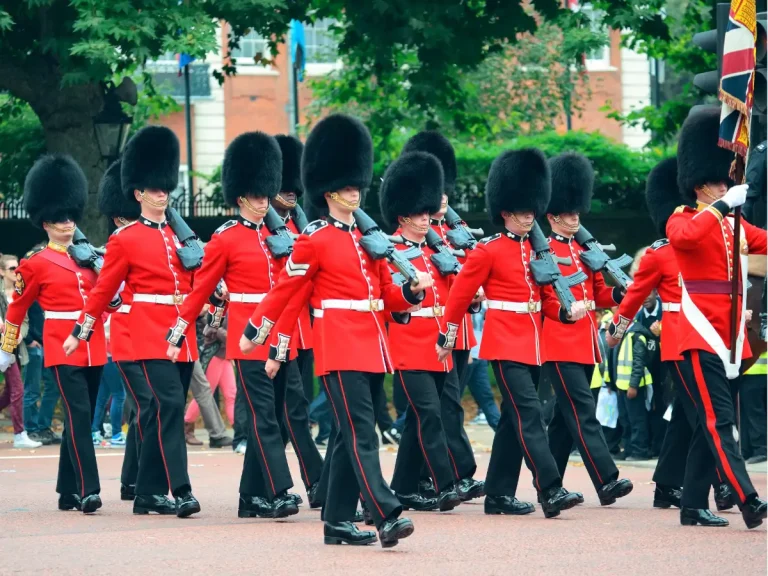
Start your morning with the Changing of the Guard at Buckingham Palace.
Before you build your whole morning around it, check the schedule. It typically runs Mondays, Wednesdays, and Fridays at 11:00 a.m., and daily in June and July. Show up without checking and you might be standing in front of an empty forecourt wondering what went wrong.
The ceremony is exactly what it looks like in every photo: red tunics, bearskin hats, the band, and very serious expressions. It’s free to watch, but it can get crowded.
If you want to actually see what’s happening, a small group tour is worth it. Guides know where to position you so you’re not staring at the back of someone’s head the entire time.
Elizabeth Tower & Big Ben
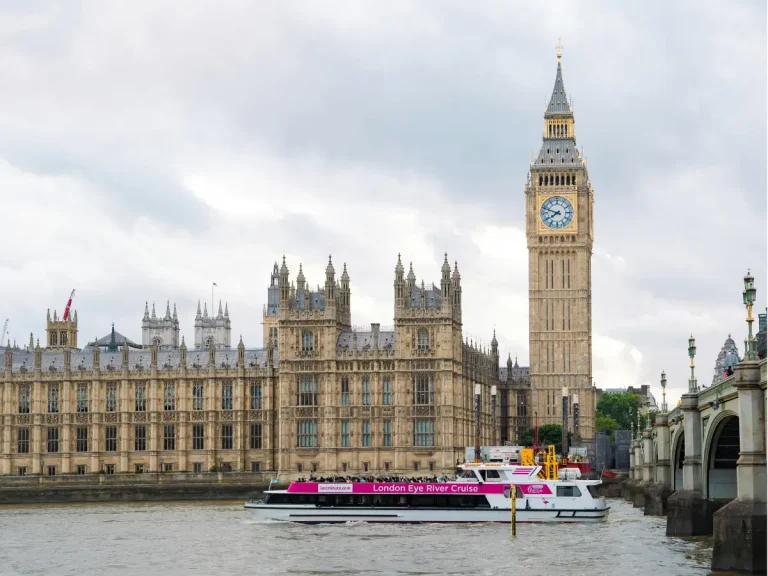
After the Guard, make your way to Westminster for the Big Ben tour. Climbing 334 stairs to the top is exactly as much of a workout as it sounds, but the views over London make every step worth it.
A couple things most people don’t realize:
For everything you need to know about booking, I break it all down in my full Big Ben tour review.
Westminster & the Embankment
After Big Ben, you’re already in one of the most walkable parts of London.
Westminster Abbey is right there if you haven’t been yet. Walk across Westminster Bridge for the classic view of the Houses of Parliament and the Thames, then follow the Embankment toward the South Bank.
It’s a good way to decompress after five days of non-stop sightseeing and take in the city at a slower pace before you head home.
Where to Eat in London
I’m not a foodie and this isn’t that kind of travel blog. But as a vegan, I’m always relieved when I find somewhere that actually has options, and London was surprisingly very vegan friendly. Here are four places worth calling out.
Churchill Arms
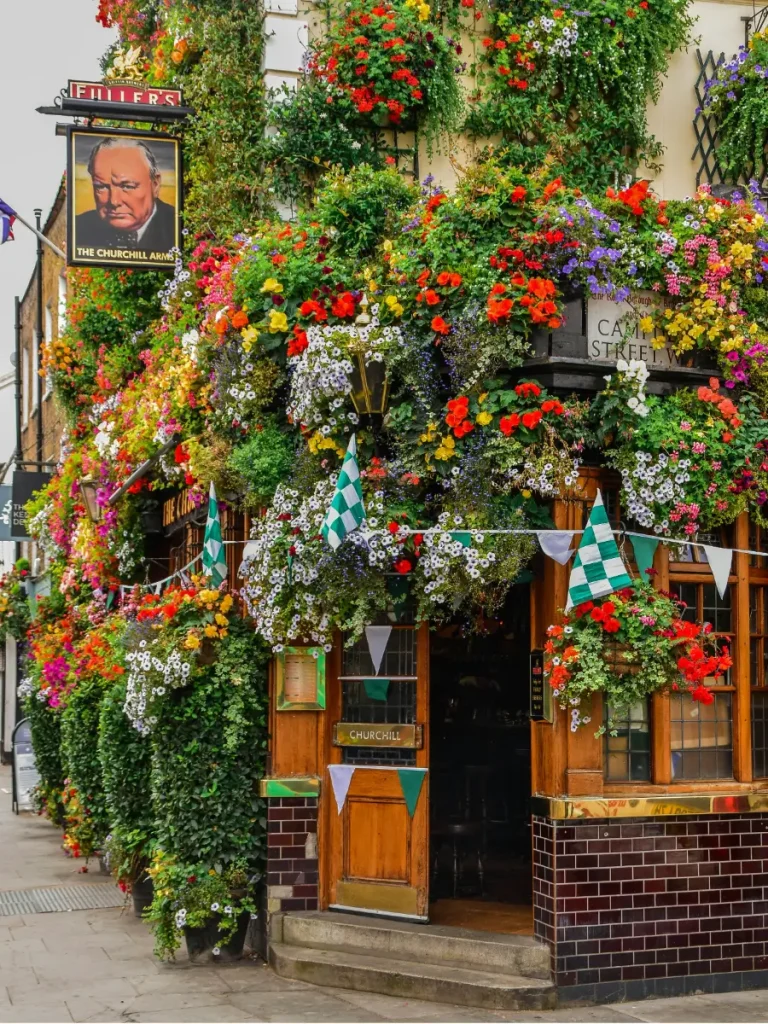
The Churchill Arms is a Kensington pub that’s become one of the most photographed spots in London, and for good reason. The exterior is covered in window boxes overflowing with flowers and it looks almost aggressively charming.
What a lot of people don’t realize is that it also serves genuinely good Thai food inside. It’s a fun combination that shouldn’t work as well as it does. It’s right near Kensington Palace, which makes it a natural stop on Day 1.
Seating is limited, so make a reservation in advance.
Tower of London Cafeteria
The cafeteria at the Tower of London is a dark horse. Nobody goes to a medieval fortress expecting a great meal, but the vegan pie with roasted vegetables and mashed potatoes I had there was one of the best things I ate on the entire trip.
The Red Lion
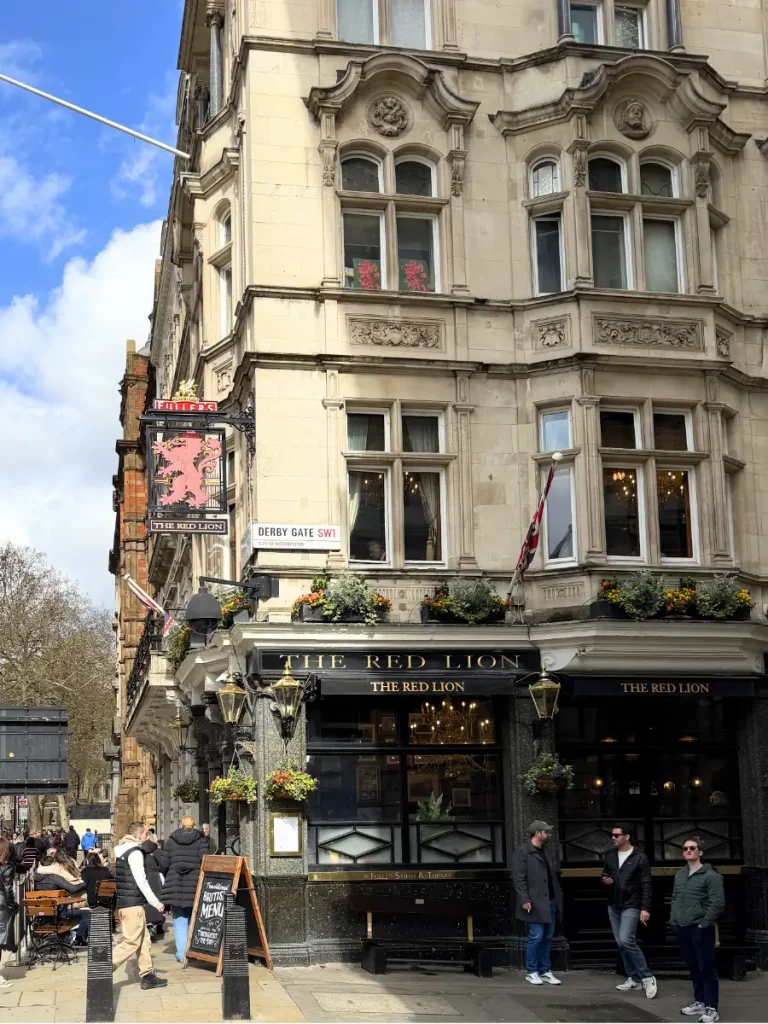
I stumbled across this by pure happenstance and hunger. I only found out after the fact that it was Winston Churchill’s favorite London pub, which makes sense considering how close it is to Parliament and Downing Street. The Red Lion offers a vegan pie that was absolutely delicious and kept me uncomfortably full for the rest of the day.
Pret a Manger
Not a revolutionary recommendation, but a practical one. Pret a Manger is everywhere in London and as a vegan, knowing that going in is genuinely useful.
They rotate their menu regularly and usually have solid options for breakfast and lunch, including pastries that are worth grabbing on the go. When you’re between attractions and hunger strikes, you’ll be glad you know where the nearest one is.
Where to Stay in London
Where you stay in London makes a bigger difference than in most cities because it’s so spread out.
For this London itinerary, two neighborhoods make the most sense: Kensington for Days 1 and 4, and the Tower Bridge area for Days 2 and 3. If you’re only picking one base, the Tower Bridge area gives you slightly better access to more of the itinerary overall.
If you’re booking your trip now, it’s worth checking availability early. Central London hotels in these areas tend to fill up quickly. You can browse options for your dates here.
The Dixon, Tower Bridge
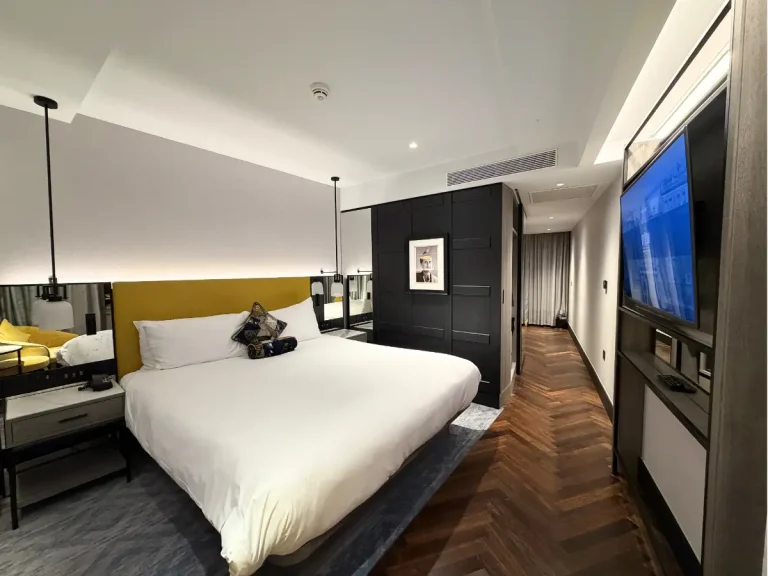
The Dixon is a former courthouse turned hotel, which means it’s got more history baked into the walls than most places you’ll stay. The rooms are modern and noticeably bigger than your average London hotel room. I paid about $30 for an upgrade to a high floor and it was worth it.
The location is also hard to beat. Tower Bridge is right up the street, the Tower of London is about a 10 minute walk and the Jack the Ripper walking tour starts practically around the corner.
The area is also incredibly walkable early in the morning before the city wakes up. I walked from the hotel all the way to St. Paul’s Cathedral before 9:00 a.m., stopping at St. Dunstan in the East Church and Leadenhall Market on the way, and had all of it almost entirely to myself. That alone is worth factoring into where you stay.
Hotel Xenia, Kensington
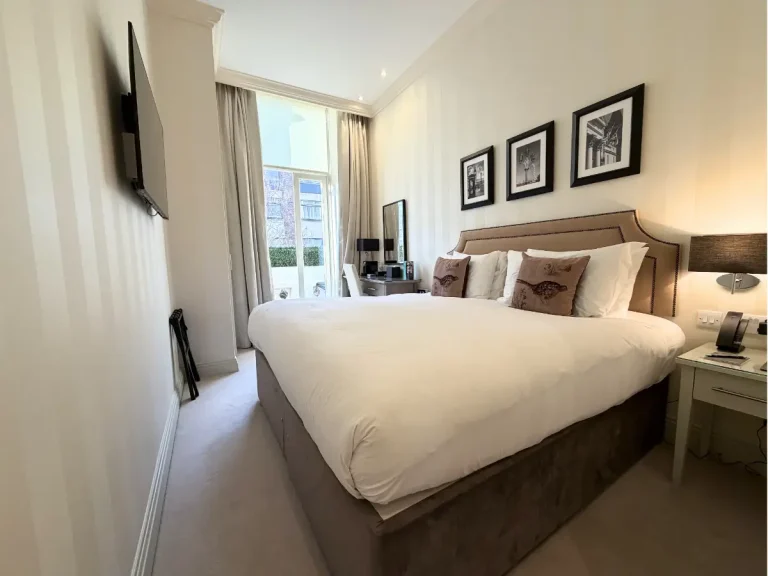
Hotel Xenia is a completely different vibe. It’s a boutique hotel in Kensington within walking distance of the V&A Museum and the Natural History Museum, which makes it a natural fit for Day 1 and a museum day if you go that route on Day 4. (I switched hotels about halfway through my London trip.)
There’s a grocery store right down the street, which is useful for grabbing snacks and breakfast items without paying hotel prices.
One thing to know going in: the rooms are small. London hotel small. I’m pretty sure you could fit a piece of paper between the bathroom door and the sink when it was open. But the location is excellent and for a mid-range stay in Kensington, it delivers where it counts.
If you like this area but want to compare options, you can browse other hotels in Kensington here.
London Itinerary FAQs
Still have a few questions before your trip? These are the ones that come up most often when planning your London itinerary.
Is 5 days enough to see London?
Yes. Five days is enough to see London’s major highlights, take a day trip, and still enjoy the city without feeling rushed. You won’t see everything, and you’re not supposed to.
This London itinerary covers the royal palaces, the Tower of London, a WWII day, a day trip outside the city and the iconic Westminster landmarks. What it doesn’t cover is an invitation to come back.
What is the best time of year to visit London?
The best time to visit London is late spring through early summer (May to July), when the weather is milder and key attractions are fully open.
Late spring and early summer are the sweet spot. The days are long, the weather is decent by London standards, and the Buckingham Palace State Rooms are open.
June and July also mean the Changing of the Guard happens daily instead of a few times a week.
The tradeoff is crowds and higher hotel prices.
If you don’t mind cooler temperatures, shoulder season in April and September is worth considering. I visited in March and while it was chilly, it never felt overwhelming, and the major attractions were noticeably less packed.
Is London expensive to visit?
Yes, London is an expensive city, but you can balance costs by mixing paid attractions with free experiences.
London isn’t cheap, and it’s worth going in with realistic expectations. Accommodation, restaurants, and transport all add up quickly.
That said, some of the best things on this itinerary are free:
Where you’ll feel it most is flights. If you’re flying in and out of Heathrow, the taxes and fees are no joke.
Does the Changing of the Guard happen every day?
No. For most of the year, the Changing of the Guard takes place three times a week, with daily ceremonies only in peak summer months.
For most of the year, it runs on Mondays, Wednesdays, and Fridays at 11:00 a.m. In June and July, it happens daily.
Check the official schedule before you go because it can be cancelled for state events or bad weather.
What’s the best way to get from Heathrow to central London?
The Elizabeth line is the easiest and most affordable way to get from Heathrow into central London, with direct trains taking about 30 to 40 minutes depending on your stop. It runs frequently and doesn’t require much planning, which makes it the best option for most travelers.
Taxis are available, but they’re significantly more expensive and only really make sense if you have a lot of luggage or are splitting the cost with a group.
Do I need to tip in London?
Tipping in London is appreciated but not expected at the same level as in the United States. In restaurants, 10% to 12.5% is standard, and some places add a service charge automatically, so check your bill before adding more.
You don’t need to tip at pubs when ordering at the bar. For tours and guides, a tip is a nice gesture if they did a good job.
Is London safe?
Yes, London is generally safe for tourists, but you should take basic precautions against pickpocketing and phone theft. Before my trip, I read too many stories about phones being snatched and even considered getting one of those tethers. Completely unnecessary. Just be smart.
Most phone thefts involve bicycles or scooters. Walk closer to buildings instead of the edge of the street, and avoid holding your phone loosely near the curb. Keep your bag zipped in crowded areas and don’t leave valuables on tables, especially your cell phone.
I didn’t personally see any thefts, but I did overhear about one at Kensington Palace. It sounded like someone left valuables unattended. Standard city awareness goes a long way here.
Ready to Plan Your London Trip?
Five days in London goes faster than you’d think. Book the tours that need booking, check the Changing of the Guard schedule before Day 5, and don’t let anyone talk you out of Kensington Palace.
If you’re planning your trip now, it’s worth locking in your key tickets and hotels early so you can follow this itinerary without having to rearrange things last minute.
If you’ve already been to London and you’re looking to go deeper, the Tower of London at night and Bletchley Park are the two things on this itinerary I’d go back for without hesitation.
Pin Now, Plan Later
Save this London itinerary pin for your trip!