The Imperial Carriage Museum: Schönbrunn’s Crown Jewel No One Talks About
Most people who visit Schönbrunn Palace follow the same path: queue for the palace tour, walk around the gardens, maybe hike up to the Gloriette and leave. Meanwhile, they’re walking right past one of the most interesting museums on the entire property: the Imperial Carriage Museum. I would know because that’s exactly what I did when I visited Schonbrunn Palace for the first time. When I went back, I couldn’t believe I’d skipped it the first time. If you’re already making the trip out to Schönbrunn Palace, you need to know about this royal museum before you go.
This post may contain affiliate links, meaning if you decide to make a purchase, I may earn a small commission at no additional cost to you. Read the full privacy policy here.
Quick Answer: Is the Imperial Carriage Museum Worth It?
Yes. If you’re already visiting Schönbrunn Palace, the Imperial Carriage Museum is one of the most worthwhile add-ons on the property. The museum houses golden coronation coaches, Sisi artifacts, the royal hearse and even Napoleon’s coronation carriage, which later became Sisi’s wedding carriage.
It’s also dramatically less crowded than the palace itself. I arrived right when it opened and counted maybe ten other people inside.
At a Glance
What Is the Imperial Carriage Museum?
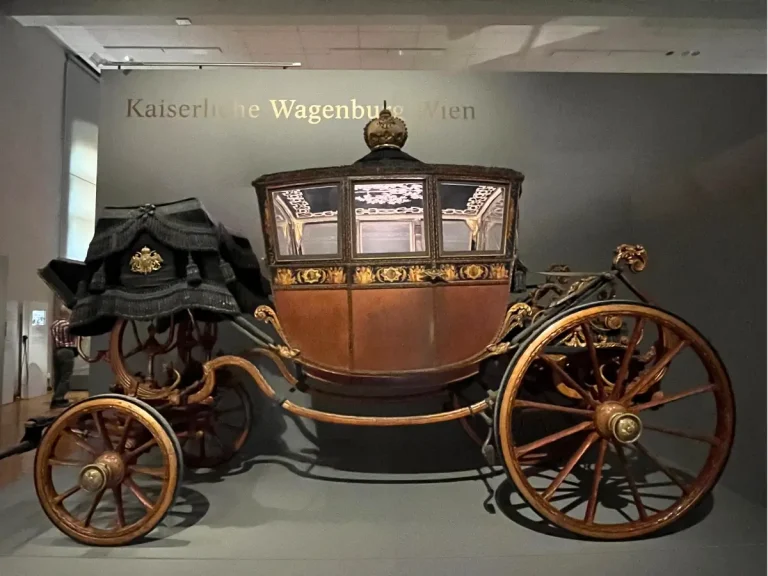
The Imperial Carriage Museum, or Kaiserliche Wagenburg, is located on the Schönbrunn grounds but is actually run by the Kunsthistorisches Museum. That separation is probably why it gets so little attention. You can’t bundle it with any Schönbrunn Palace ticket or combo, so it rarely shows up in palace guides or itinerary roundups.
What’s inside makes the palace feel like an opening act. The focus is on the moments that defined the dynasty, like weddings, funerals and coronations, and quite literally how they got there. It feels less like a standard museum visit and more like seeing the machinery behind an empire.
What’s On Display at the Imperial Carriage Museum
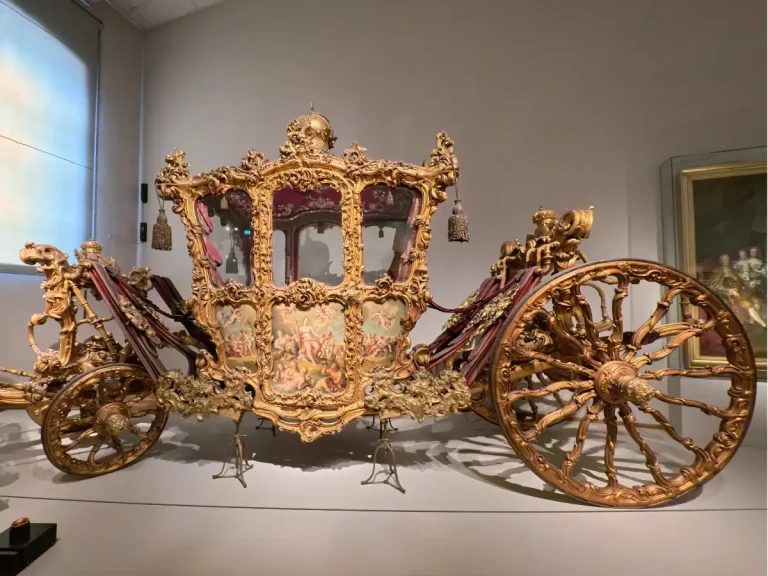
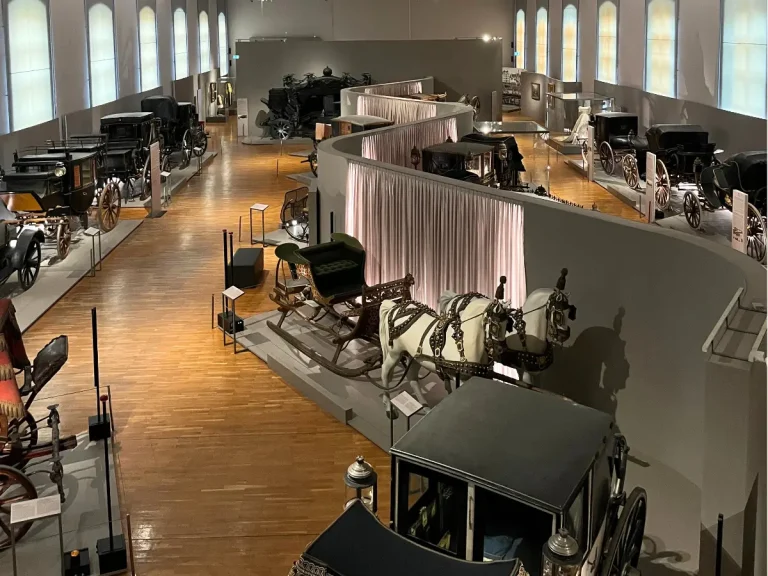
The Imperial Carriage Museum collection is bigger than it looks from the outside. These are the pieces worth slowing down for.
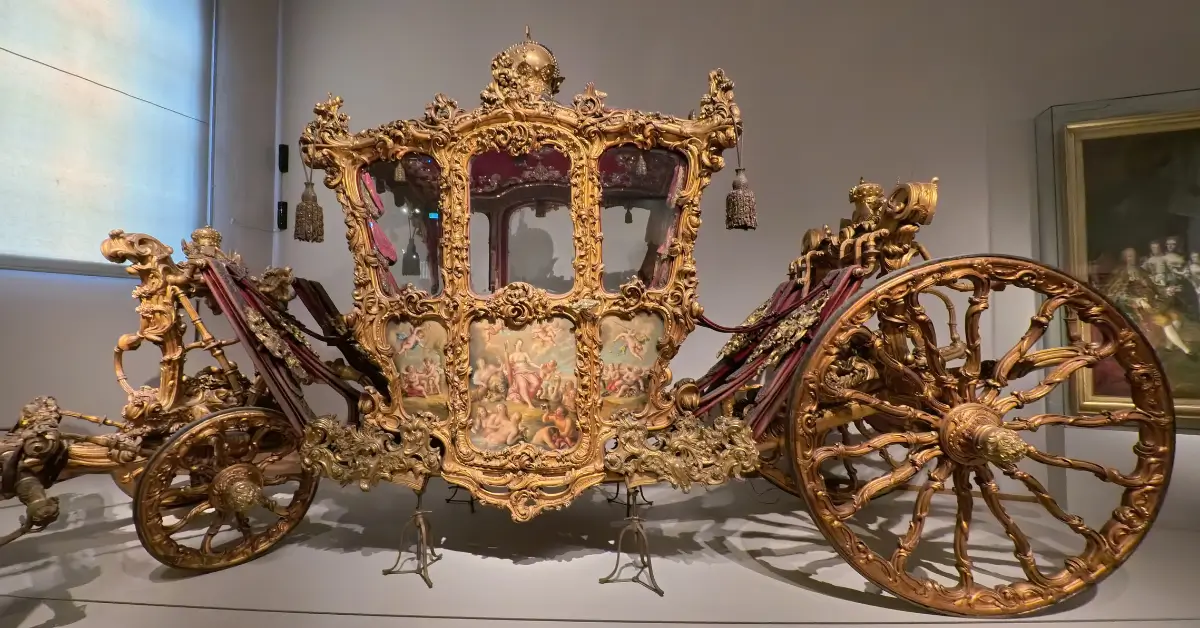
The Imperial Carriage
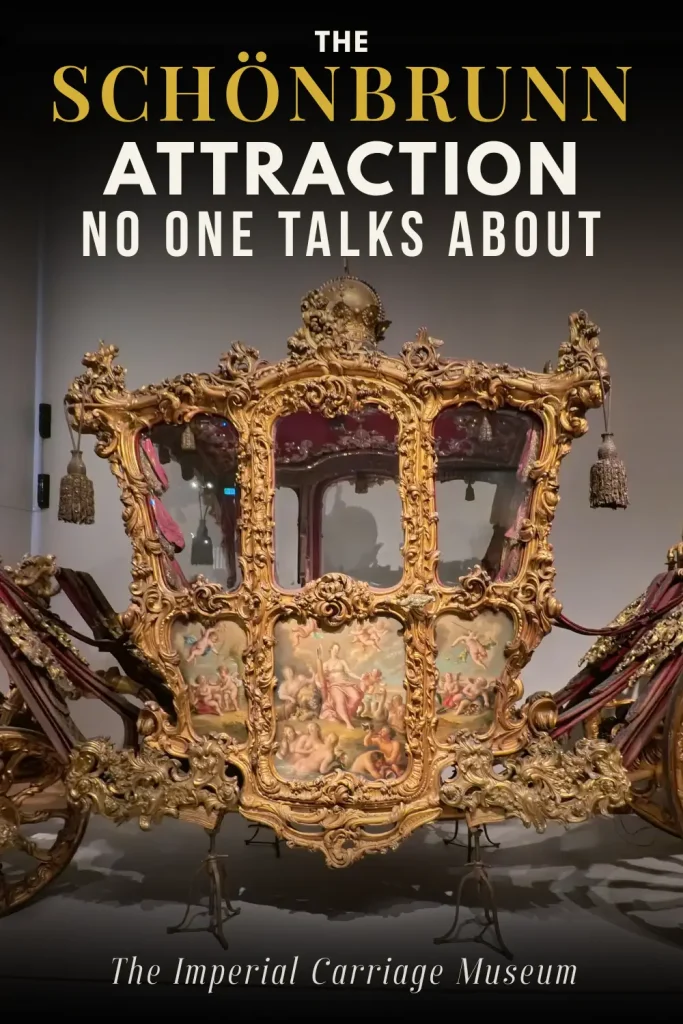
Also known as “The Coronation Coach” this nearly 300-year-old gilded coach is the Viennese court’s most elegant carriage. It was exclusively used by the Emperor, Empress and the Crown Prince on the most important state occasions.
Napoleon’s Milan Coronation Carriage
The carriage Napoleon used for his Milan coronation in 1805 calls the Kaiserliche Wagenburg home. Originally completely gold-plated, it later became Empress Elisabeth’s wedding carriage. That layered history alone makes it worth stopping in front of for a while. If you already loved the Sisi Museum at the Hofburg, this feels like an extension of that story.
The Imperial Hearse
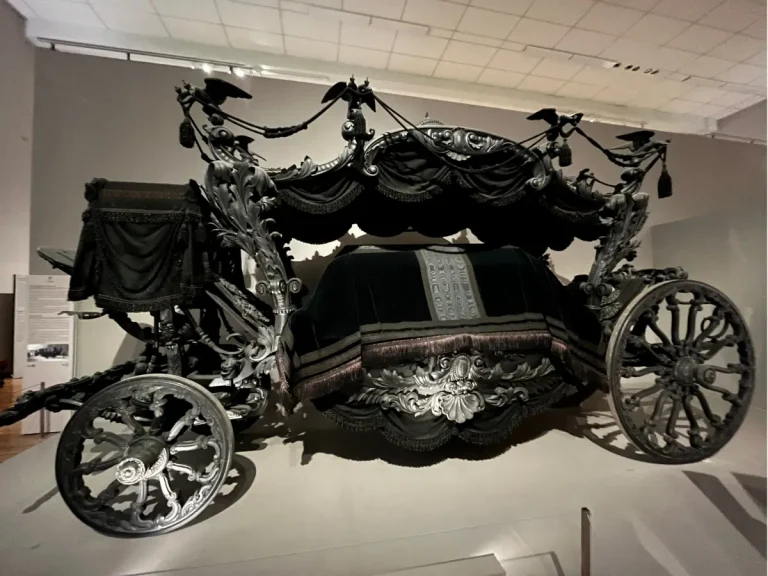
One of the most striking things in the Imperial Carriage Museum is the Imperial Hearse. The black neo-baroque hearse topped with ornate carvings of the iconic Habsburg eagle is the Austrian Rolls Royce of royal funeral processions. It was used for the funerals of Crown Prince Rudolph, Empress Sisi, Emperor Franz Joseph and Zita, the last Austrian Empress. Seeing it in person completely reframes a visit to the Imperial Crypt.
Sisi’s Dresses, Riding Gear and Other Unexpected Objects
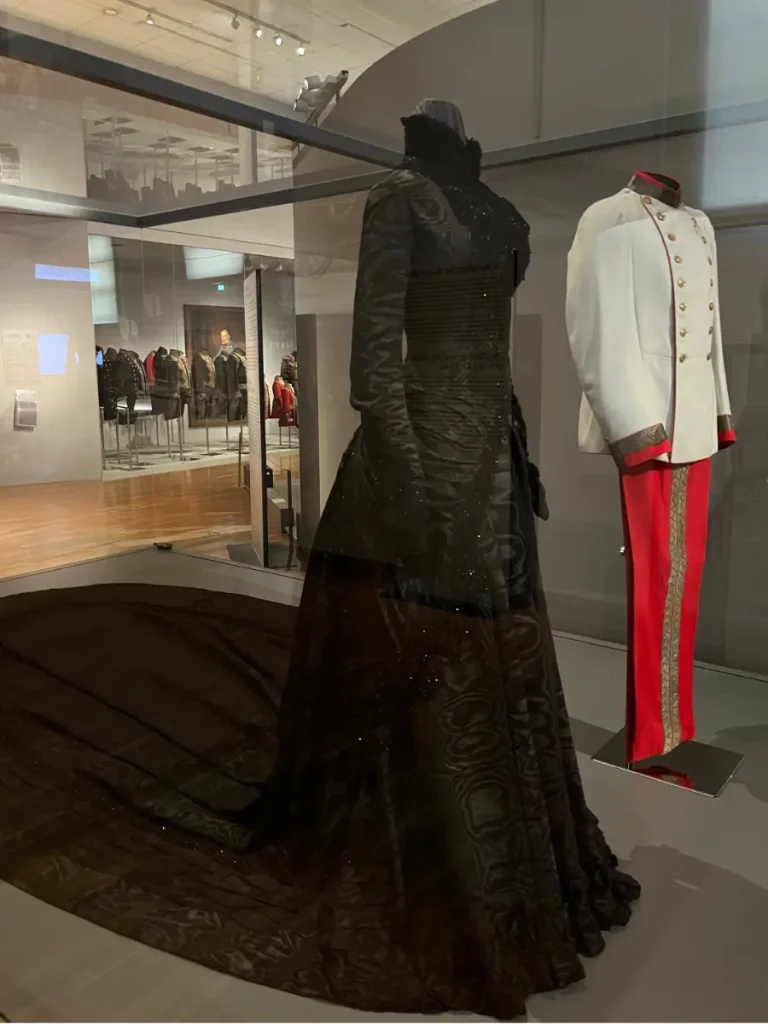
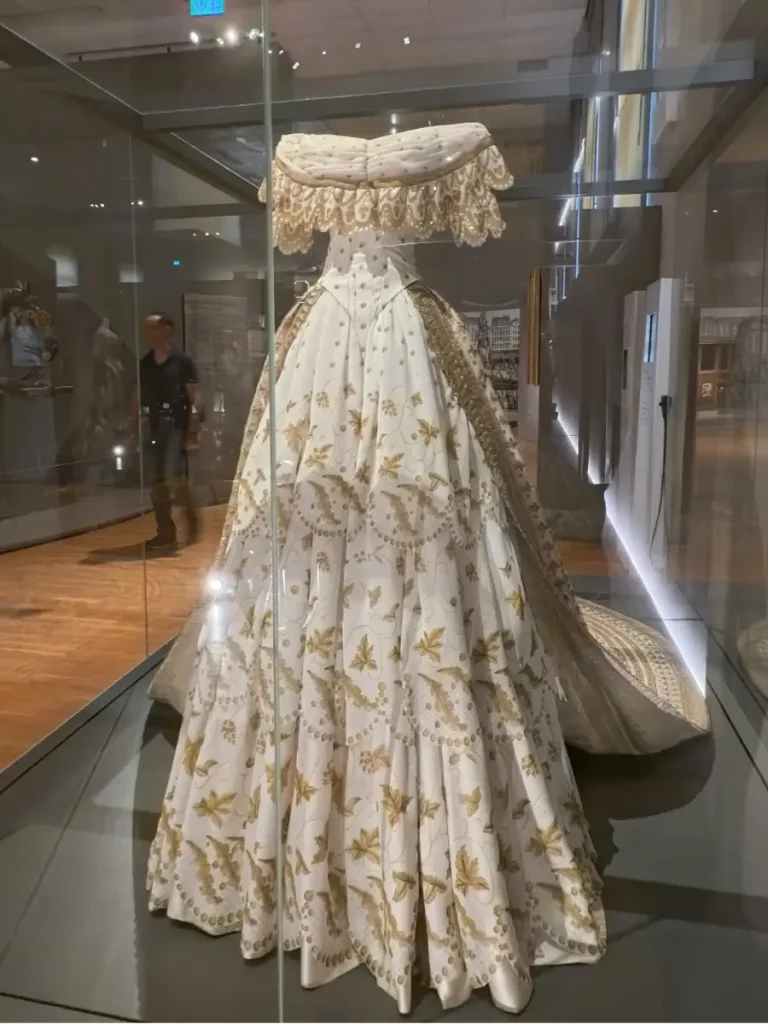
The Imperial Carriage Museum displays several pieces connected to Sisi, including her Black Court Dress and her riding gear. The waist measurements are genuinely startling in person.
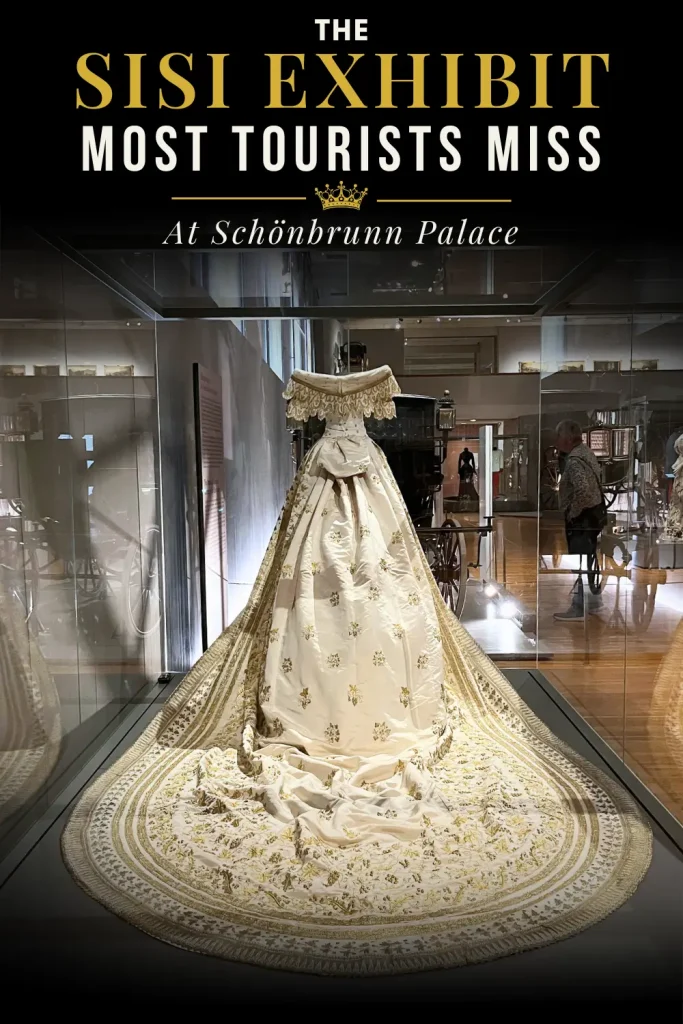
The most impressive piece is the replica of Sisi’s wedding dress, and the backstory is worth knowing before you see it.
When Sisi married Emperor Franz Joseph in 1854, journalists and illustrators were banned from the ceremony, which meant no confirmed images of the dress existed. After the wedding, it disappeared. The only surviving piece was the elaborate train, which has been at the museum for years.
The mystery was only partially solved in 2021, when a Spanish researcher tracked down an obscure 1857 portrait of Sisi wearing the dress at a museum in the Czech Republic.
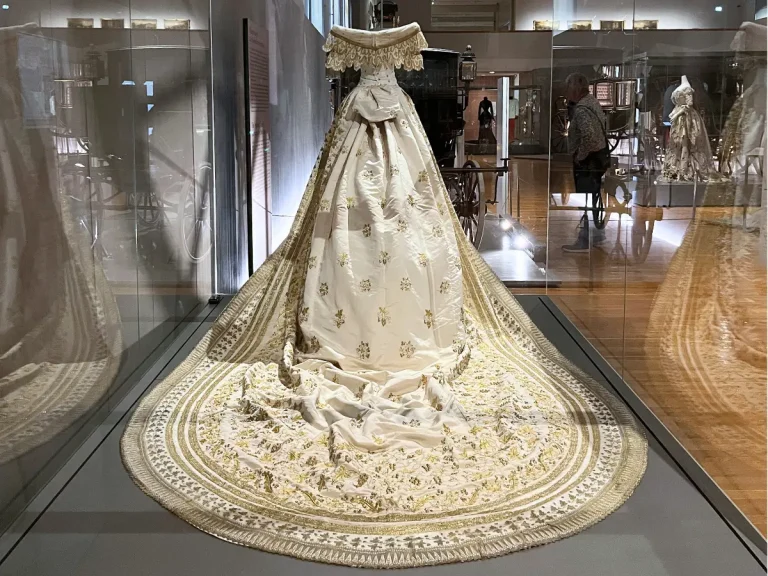
The museum’s director spent months decoding the painting, then assembled a team to reconstruct the gown. They even sourced a fabric printer in Bavaria who completed the job the weekend before he was hospitalized. The replica itself was handmade by a Viennese restorer.
Even now, the museum director puts the odds at 50% that this is actually what Sisi wore. Which makes the dress on display either a painstaking historical reconstruction or an elaborate educated guess. As a believer in fairytale endings, I’m going with the latter.
And then there’s the Ashtray of Crown Prince Rudolf, made from the hoof of his pony Tomy. Yes, you read that correctly.
Why the Imperial Carriage Museum Feels Completely Different From the Palace
I entered the Imperial Carriage Museum right when it opened and hardly ever saw anyone else walking around me.
In fact, there were so few people at the Imperial Carriage Museum, the museum worker at the entrance desk didn’t even see me. Meanwhile, over at the palace, tourists were lining up to walk through the state apartments.
That gap is partly because the museum runs on a separate ticket and isn’t marketed alongside the palace, so a lot of visitors don’t know it exists until they’re already there. But it works in your favor.
You can linger in front of the carriages, read every placard and move at whatever pace you want without someone breathing down your neck. Fewer crowds also means you won’t have to take deep sighs as you wait for other tourists to get out of your way to take pictures.
Planning a Longer Vienna Trip?
If you’re interested in Sisi, the Habsburgs and Vienna’s imperial history, my 3-day Vienna itinerary covers the best royal sites in the city.
Tips for Visiting the Imperial Carriage Museum
A few things worth knowing before you go.
Tickets
The Imperial Carriage Museum requires a separate ticket and cannot be bundled with a Schönbrunn Palace ticket. I bought mine in advance because I don’t like waiting.
Audio Guide
Skipping the €2 audio guide is probably my biggest regret from the visit. The context would have added to the experience.
How to Do Both in One Day
If you’re combining the museum with a Schönbrunn Palace tour, do the palace first. The palace lines get long fast while the carriage museum stays calm, so you’re better off tackling the crowds early and saving the museum for after.
Trying to figure out how to structure your day? I break down exactly what’s worth prioritizing at Schönbrunn, including what to skip, in my full Schönbrunn Palace guide.
How Long to Budget
45 to 60 minutes is the right range for most people. If you’re deep into Sisi and Habsburg history, give yourself more time.
This Ended Up Being My Favorite Part of Schönbrunn
Golden coronation coaches, Sisi artifacts, royal funeral carriages and almost no crowds. I liked this more than the palace itself.
Final Thoughts on the Imperial Carriage Museum
The Imperial Carriage Museum doesn’t get a lot of attention, and I’m here to give it the attention it deserves. If you’re already taking the time to visit Schönbrunn Palace, this royal detour will make the whole trip worth it.
Planning a Vienna trip? Read my full 3-Day Vienna Itinerary for more royal sites, museums and practical tips.
Pin Now, Plan Later
Save this Imperial Carriage Museum pin for your Vienna itinerary.