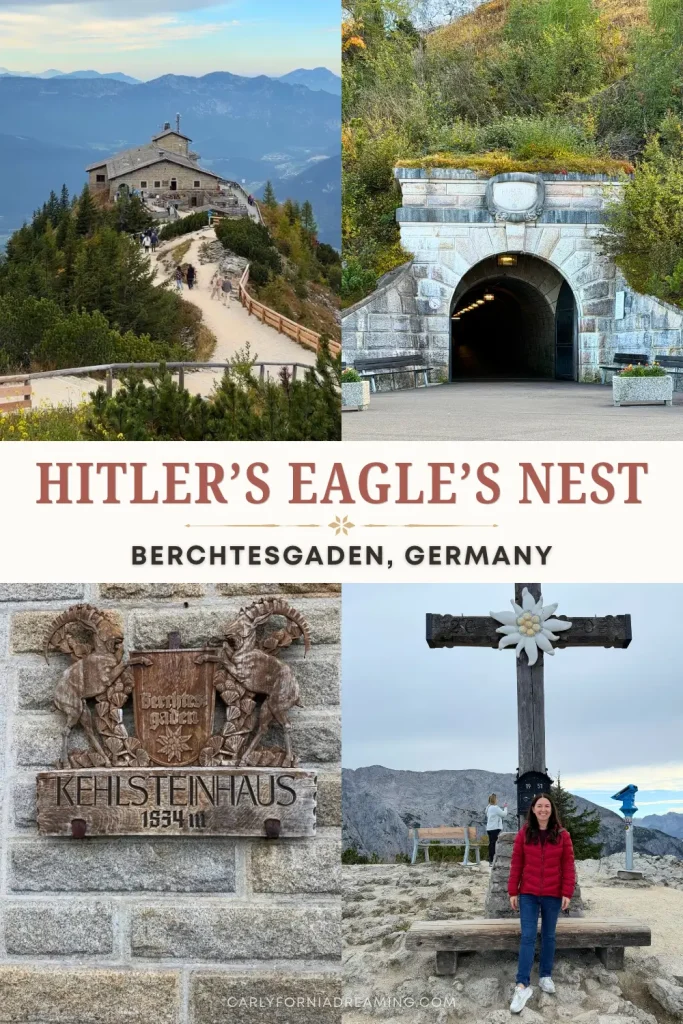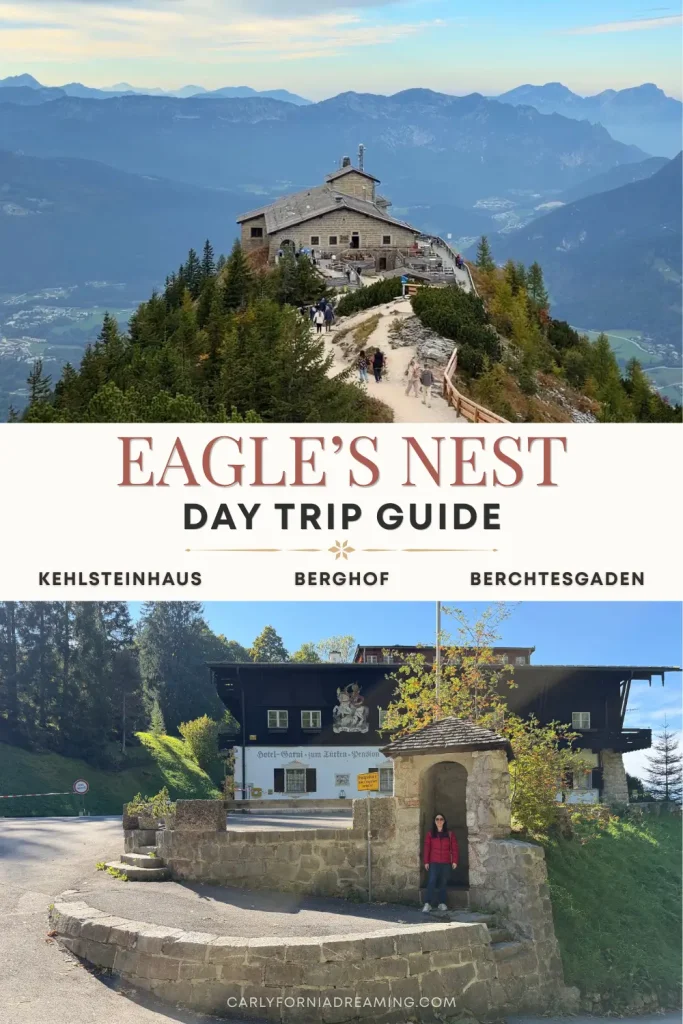
I Was At Hitler’s Eagle’s Nest 17 Days Before a Fire Destroyed It. Here’s Why You Should Still Visit Berchtesgaden.
I’ve recently become obsessed with World War II history. So on my most recent visit to Salzburg, I put the Eagle’s Nest on my itinerary. And I’m so glad I did. Because less than 3 weeks later, Hitler’s famous eyrie would be in ruins.
I know what you’re thinking: why do you care about something that was associated with Hitler? And I get it. The Eagle’s Nest’s history is complicated. But I also think it’s important to remember history, not erase or forget it.
While the Eagle’s Nest may be off limits for a while, don’t write off visiting Berchtesgaden, Germany, just yet! There’s plenty to see and do in the area, especially if you’re interested in World War II history.
This post may contain affiliate links, meaning if you decide to make a purchase, I may earn a small commission at no additional cost to you. Read the full privacy policy here.
Eagle’s Nest & Obersalzberg Dokumentation Center at a Glance
📍 Location: Berchtesgaden, Germany
🚆 From Salzburg: 50 minutes by bus or 80 minutes by train
📅 Eagle’s Nest Status: Closed following the October 2026 fire
⏰ Time Needed: 1.5–2 hours for Dokumentation Obersalzberg
🎟️ Dokumentation Obersalzberg Tickets: €4.50 for adults
👥 Crowds: Dokumentation Obersalzberg gets busier around midday
🏛️ Pair It With: Berghof ruins, Königssee or Berchtesgaden Salt Mines
Jump to:
What is the Eagle’s Nest?
What Happened to the Eagle’s Nest?
My Experience Visiting the Eagle’s Nest & Berghof
Obersalzberg Dokumentation Center
3 Things to Do in Berchtesgaden That Aren’t The Eagle’s Nest
How to Get to Berchtesgaden from Salzburg
Eagle’s Nest FAQs
What Is the Eagle’s Nest?
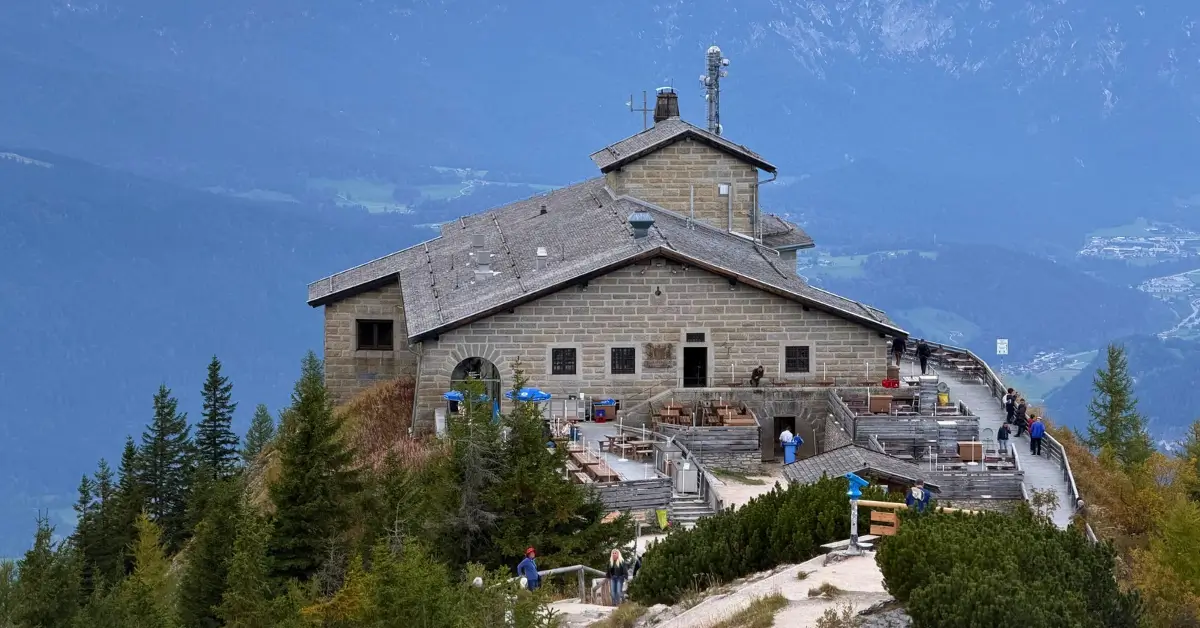
Kehlsteinhaus, which would later be known as the Eagle’s Nest, was commissioned by Martin Bormann, Hitler’s personal secretary. It sits on top of the Kehlstein, which is a subpeak of Hoher Göll.
The chalet was a Nazi show pony designed to impress foreign diplomats. And because it sits more than 1,800 meters above sea level, it was also a symbol of power.
The best way I could describe it is Ikea furniture on steroids. The stone was cut and numbered in Passau, and then put together in Obersalzberg. Crews worked pretty much around the clock to complete construction in 13 months. Miraculously only 12 workers died building it. And at least one of those deaths was the result of a drunken fight at a camp.
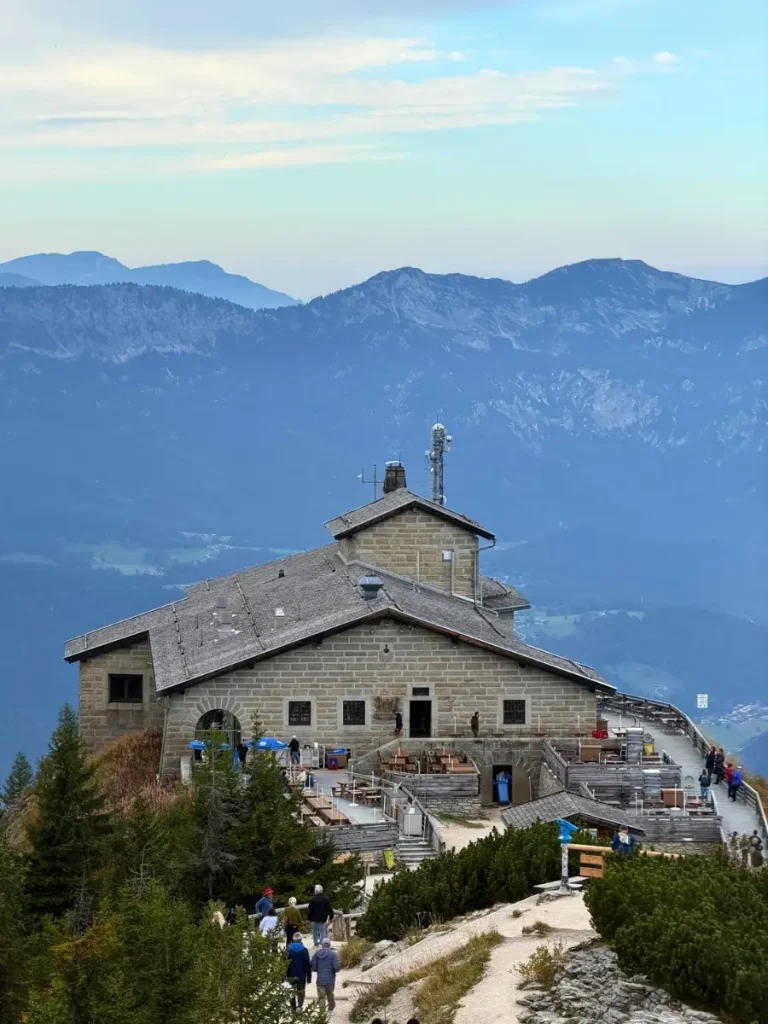
While Hitler’s 50th birthday was always the deadline to complete Eagle’s Nest, it wasn’t a surprise birthday gift. Hitler was involved in designing the layout and furnishings of some of the rooms. He also visited the Kehlsteinhaus in September 1938, seven months before it was officially presented to him in April 1939 on his 50th birthday.
Much to Martin Bormann’s chagrin, Hitler only visited Eagle’s Nest 13 times before World War II and once during the war because he was afraid of heights and didn’t trust the elevator. His mistress and eventual wife, Eva Braun, used Eagle’s Nest frequently. Her younger sister Gretl even had her wedding reception there on June 3, 1944.
Near the end of World War II, there was an attempt to bomb Eagle’s Nest, but it made it out unscathed. Unfortunately, it wouldn’t be able to survive a fire 80 years later.
What Happened to the Eagle’s Nest?
On October 23, 2026, a fire broke out at the Eagle’s Nest, causing significant damage to the historic building. I’ve seen photos and it’s pretty devastating to see that the Great Hall is basically gutted.
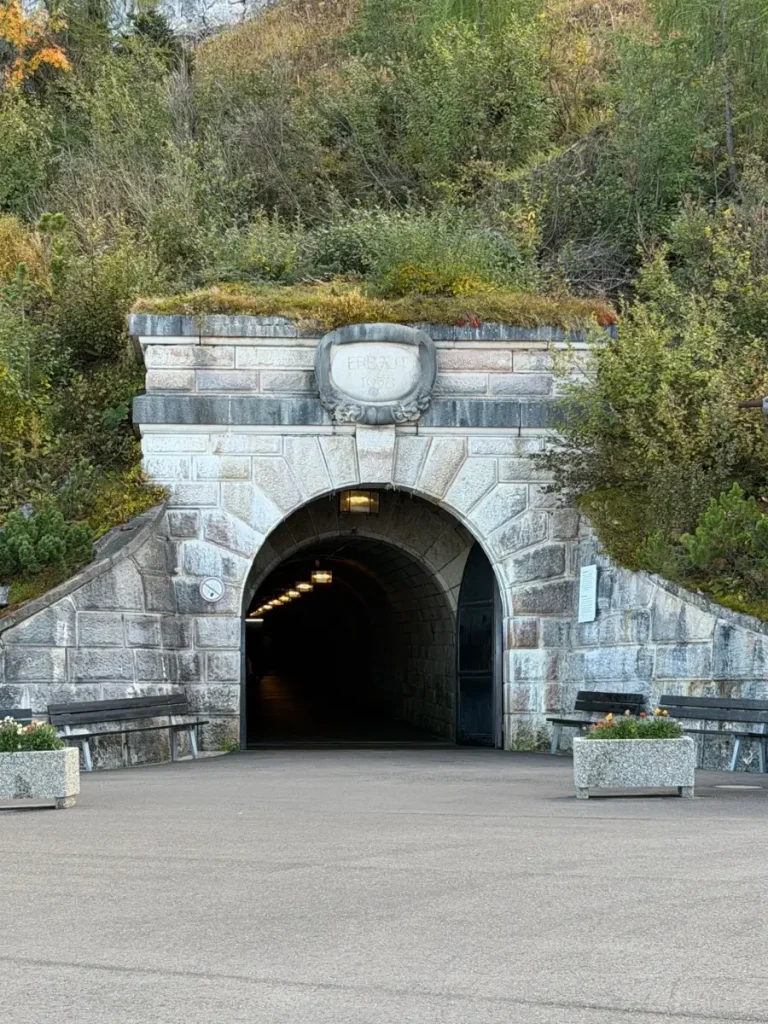
Berchtesgaden officials shared the results of their first on-site inspection on October 29. The famous brass elevator wasn’t damaged during the fire. Minus a few minor technical issues, it was operational during testing. The tunnel that leads to the elevator was mostly spared from the fire as well.
As for the rest of the building, inspections are still underway. Officials are focused on securing the structure and preventing further damage from the weather before determining what happens next.
So, will Eagle’s Nest reopen? It’s too early to say, but I’ve read that they do want to rebuild. For now, all roads and hiking trails leading to the Eagle’s Nest, including the surrounding area, are closed indefinitely.
My Experience Visiting the Eagle’s Nest
I visited Eagle’s Nest on October 6, 2026, just 17 days before the fire at Kehlsteinhaus. I went to Dokumentation Obersalzberg on my own, and then took a guided tour with Eagle’s Nest Historical Tours.
Unlike other tours that only take you to the Eagle’s Nest, this small group tour includes a bus ride through the Obersalzberg region to see the ruins of Hitler’s Berghof.
The Berghof Ruins
The main reason I chose Eagle’s Nest Historical Tours over other tours was to see the Berghof, or what’s left of it. There isn’t much, but it’s still one of those things you need to see to believe.
The tour starts with a drive through Berchtesgaden. We drove by several former SS sites, including barracks that are now apartments and an entrance to a mountain-side bomb shelter that could hold up to 300 people. The most notable, though, was the alpine home of Hermann Göring. While the original structure was obliterated in 1945, the Kempinski Berchtesgaden currently sits on the land.
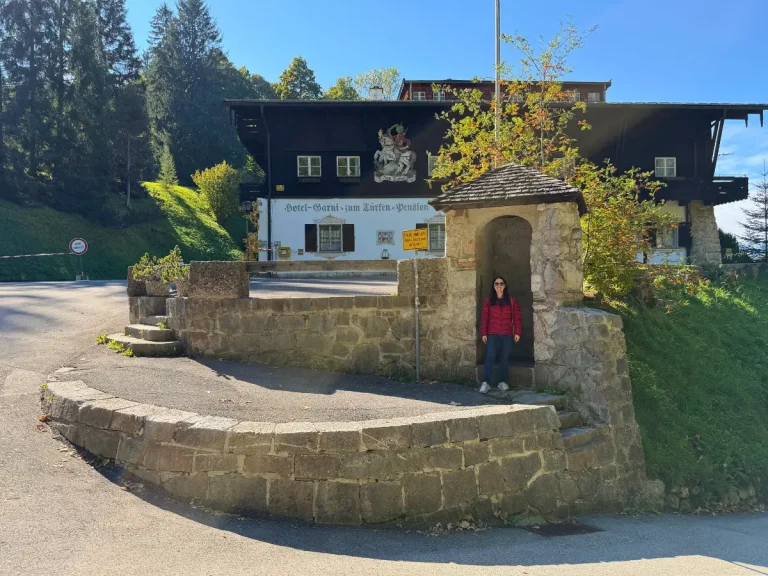
Our first stop was Hotel zum Türken, which is closed. I would have loved to see the bunkers that were once open to the public. Instead, I stood inside the original guardhouse of the Berghof.
We also walked across the street and along a trail to see one of the many entrances to the 4 miles of bunkers that sit beneath Obersalzberg. (I’d love to go back and just walk the Obersalzberg trails.)
And finally, we walked up the driveway to what a sign sitting at the location described as “the pompous Berghof.” Considering it was used as Nazi propaganda, I think that’s an accurate description.
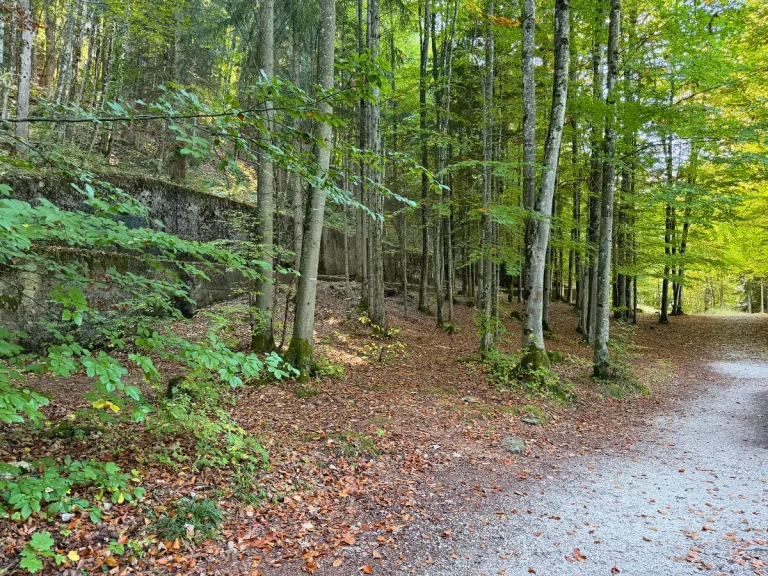
While the British bombed it on April 25, 1945 and the SS set it on fire days later, it wasn’t fully demolished until 1952 by the US. The only thing remaining is the retaining wall and the stubs of a couple of pillars. They also made sure to cover up the door that went to the bunker.
Our guide did a fantastic job showing us photos and pointing out where certain structures used to be, like the gigantic picture window in the Great Room that looked out at the Untersberg. It could actually be lowered into the ground like a pocket window, which is pretty impressive considering the time and how large it was.
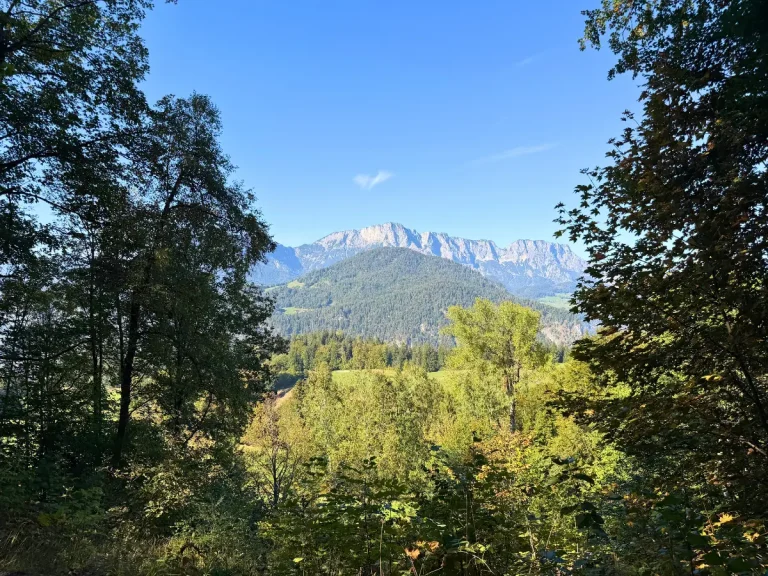
From there you could see where Hitler would walk 20 minutes to his teahouse: Teehaus am Mooslahnerkopf. The teahouse no longer exists, but it was located near the 13th hole of the golf course that’s there now. If I ever go back, I’d like to visit the viewpoint.
The Eagle’s Nest (Kehlsteinhaus)
After visiting the Berghof, we returned to where you board the buses that go to the Eagle’s Nest. There’s a small souvenir shop and free bathrooms, in case you need either.
The bus ride is about 15 minutes and the scenery is insane, as well as the one hairpin turn that makes you hope it’s not the driver’s first day. Once you exit the bus, you can’t help but throw your neck back and look up at the Eagle’s Nest. Our guide then shared more history with us as we stood at the mouth of the tunnel.
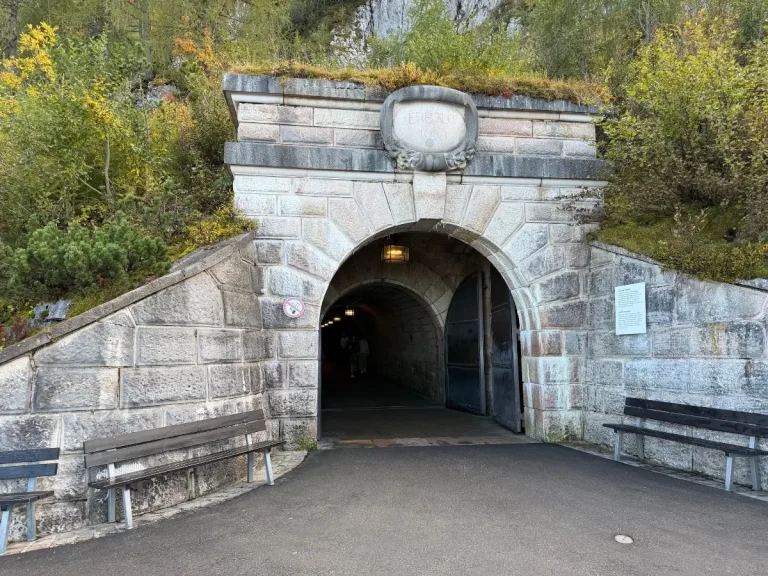
Then the real adventure began. After looking at the graffiti etched into the metal doors of the tunnel by Allied forces, we walked down the 124-meter tunnel to the famous brass elevator. The 124-meter ascent takes about 41 seconds.
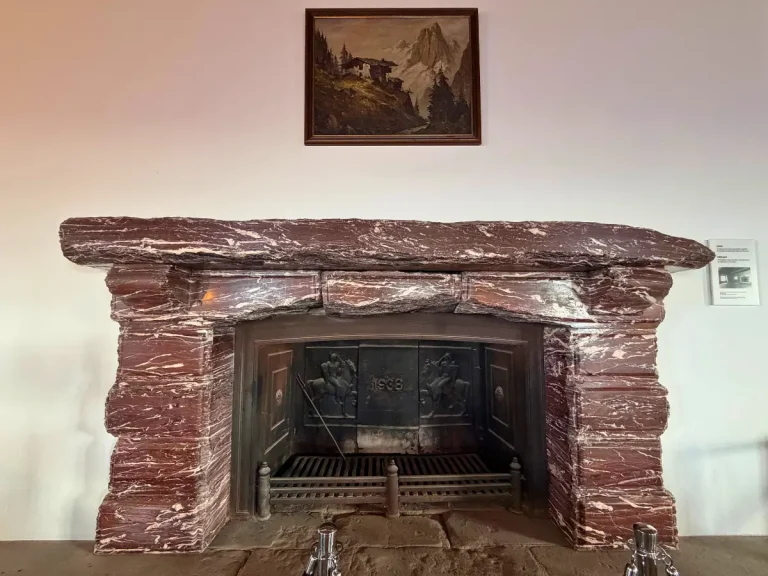
There were two things I really wanted to see: the marble fireplace and the sun terrace. Made out of red marble, the fireplace was probably a gift from Italian dictator Mussolini. (The fireplace survived the October 2026 fire but appears discolored.)
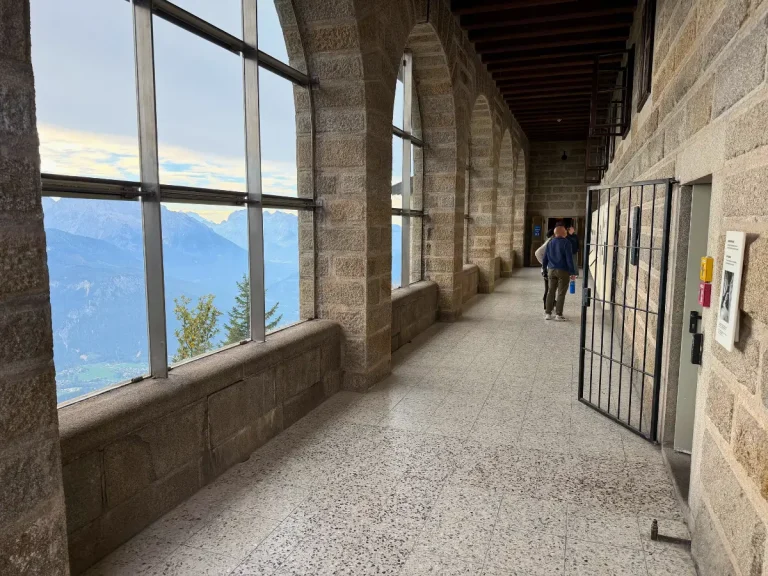
After seeing so many pictures of it, the sun terrace was also surreal to walk through. And because I was there in the afternoon and not during peak tourist season, you could actually stop and enjoy the views. There’s even an original boot scratcher at the door to the kitchen.
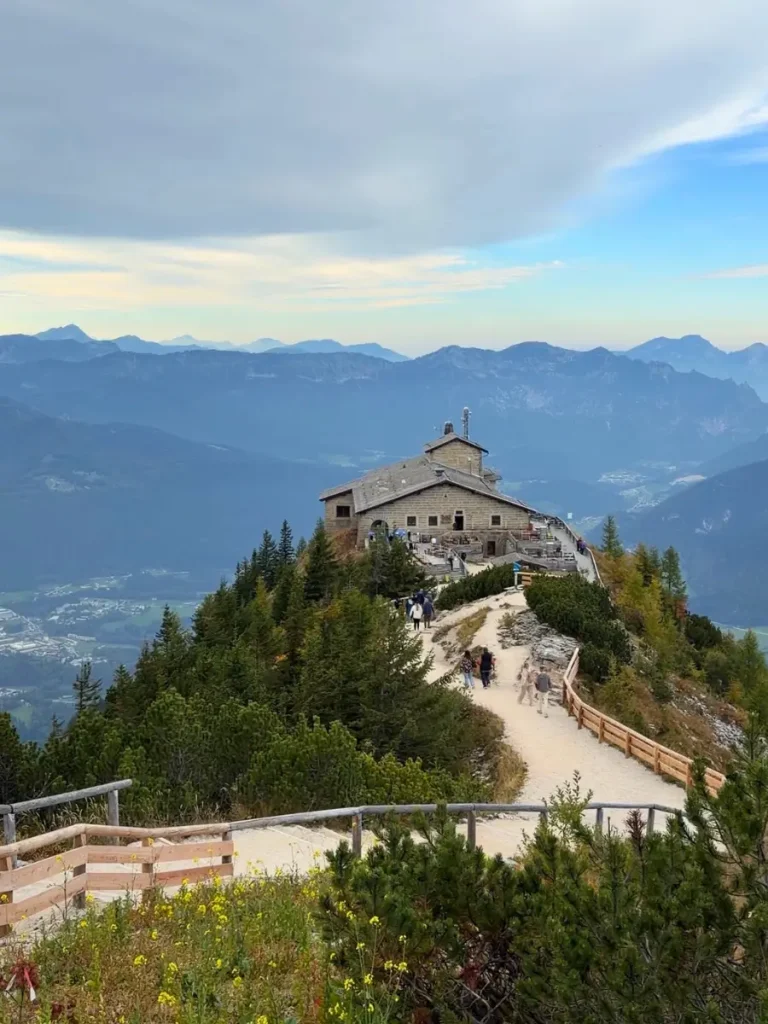
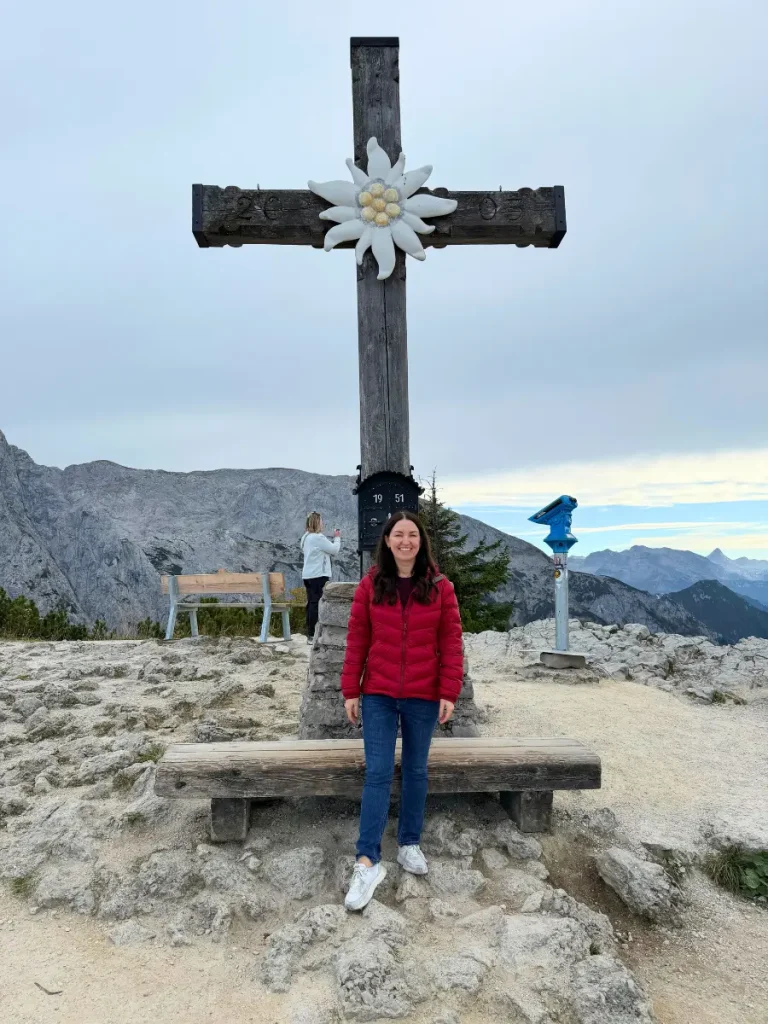
We had about 45 minutes of free time before we needed to get back on the bus. Some people in our group opted to grab a beer at the Biergarten. I opted to walk up the mountain behind Kehlsteinhaus. If and when it reopens, I highly recommend taking the time to walk up there, especially to the Edelweiss cross. On a clear day, you can see as far as Salzburg in one direction and down to Königssee in the other.
Why You Should Still Visit Dokumentation Obersalzberg
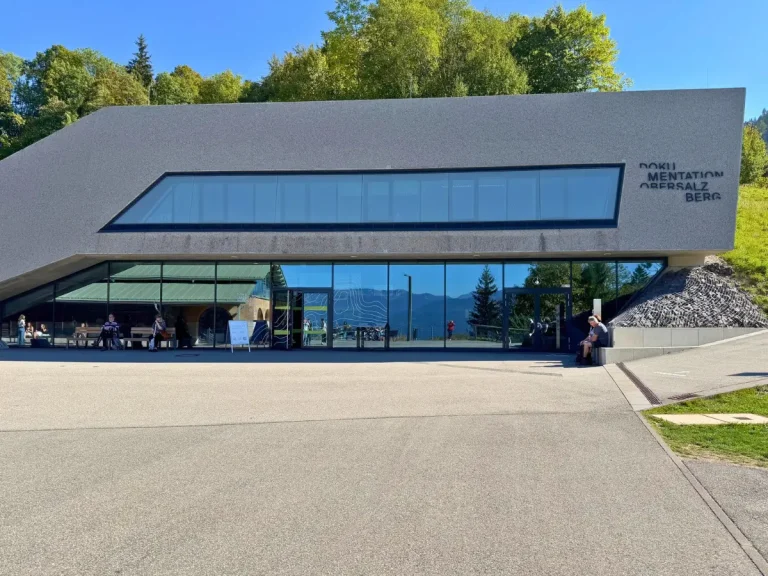
If you visit Berchtesgaden or Obersalzberg, I am begging you to not miss this incredible museum, especially if you want to go inside the bunkers.
Dokumentation Obersalzberg explains the history of Obersalzberg and how it became the second center of power for the Third Reich outside of Berlin.
The audio guide was probably one of the best ones I’ve experienced. You have the option of doing a 40-minute or 80-minute audio tour. If you have time, I’d recommend the 80-minute option. It’s thorough, engaging and gives you a better understanding of the role Obersalzberg played before, during and after Hitler’s rise to power.
It was jarring to see a first edition of Hitler’s Mein Kampf Vol. 2 and a Hitler Youth jacket on display. And after seeing the movie Nuremberg, it was wild to see one of the artworks found on Hermann Göring’s trains: Madonna on a Crescent Moon.

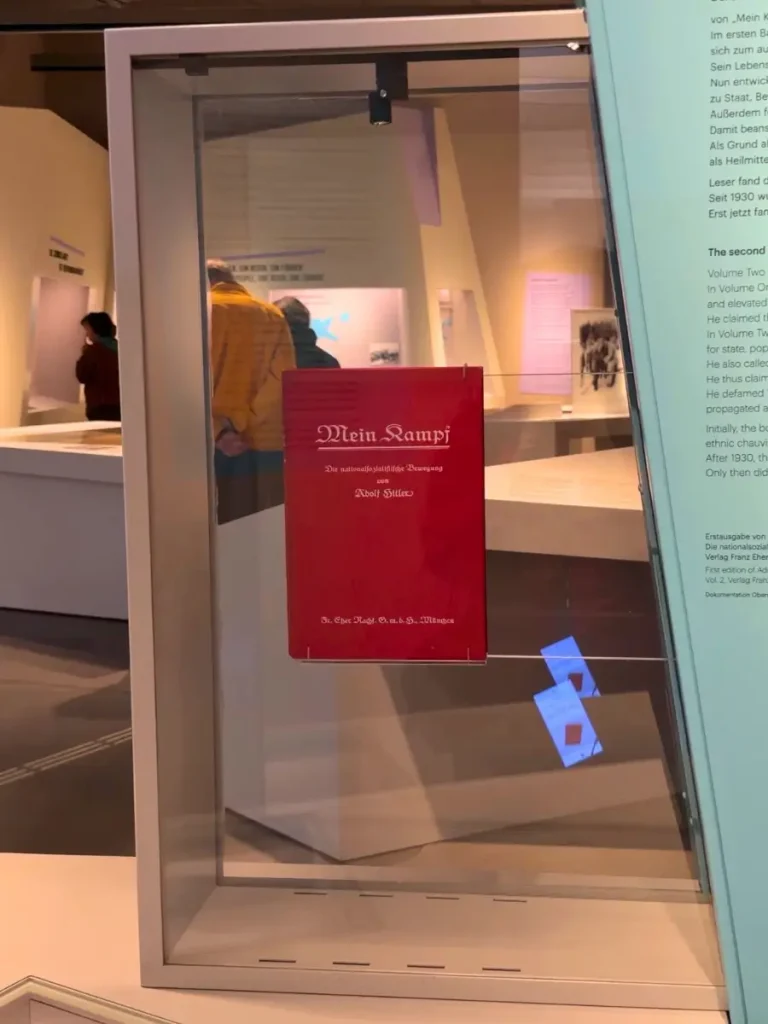
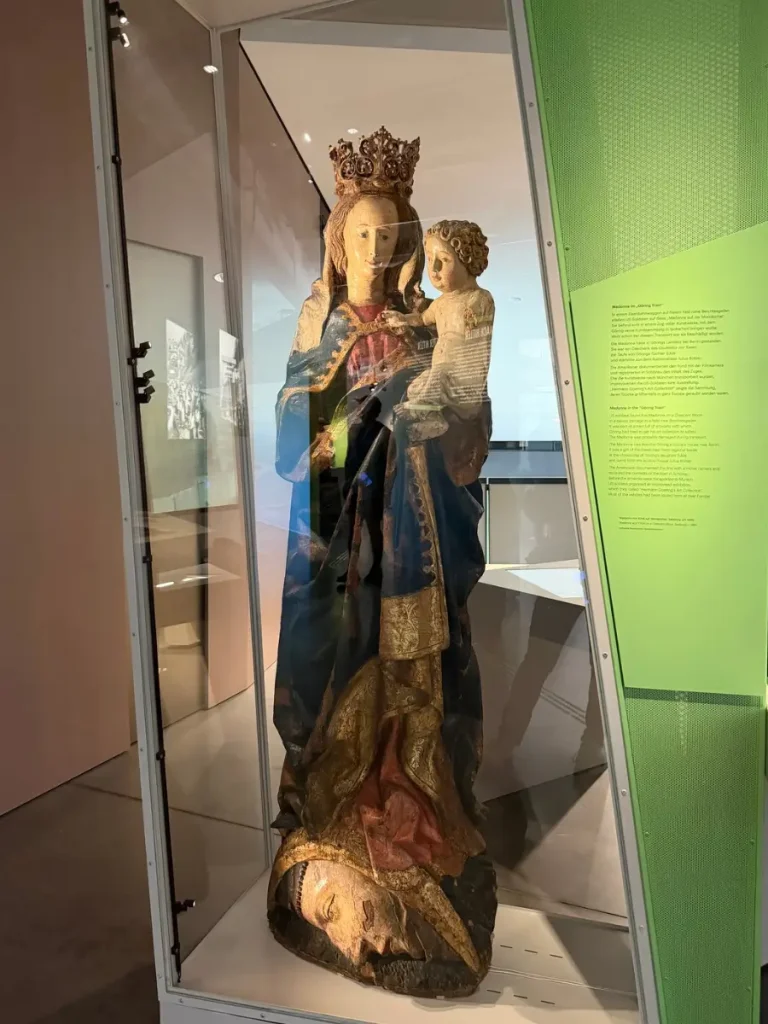
The highlight for me, though, was the bunkers. A 4-mile network of bunkers was built in Obersalzberg, with many as deep as 100 feet below the surface. Walking through the small portion underneath Dokumentation Obersalzberg was both impressive and chilling.
The most eerie thing to see was the blind shaft. It connected the bunker of the Hoher Göll Guesthouse with the Berghof Bunker, which was located 35 meters below. There used to be a staircase, but over time it rotted away. If you’re afraid of heights, don’t look down.
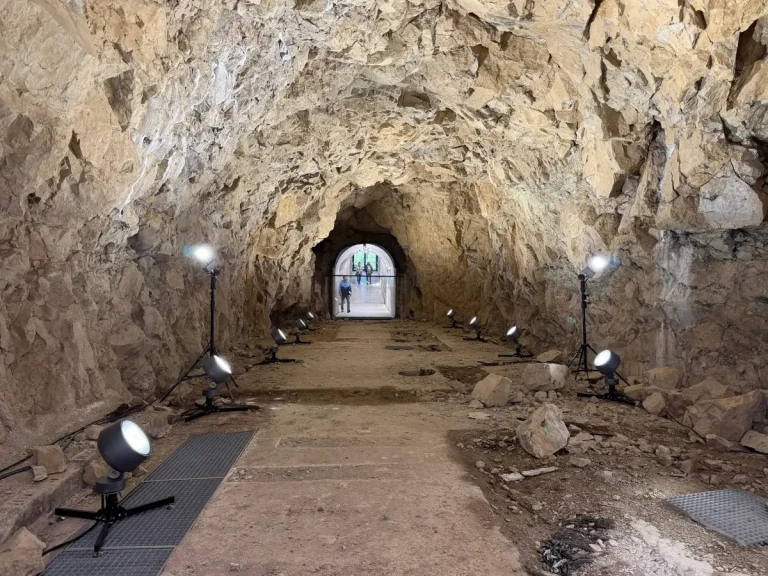
I spent a little over 90 minutes at the Dokumentation Center, but could have easily spent more because there’s so much to see. (I also got free entry since I was visiting the Eagle’s Nest later that day.)
If you visit Berchtesgaden and can’t get to the Eagle’s Nest, the Dokumentation Obersalzberg is a great alternative.
3 Things to Do in Berchtesgaden That Aren’t the Eagle’s Nest
With Eagle’s Nest closed for now, there’s still plenty to do in Berchtesgaden, Germany.
Berchtesgaden Salt Mine
Learn all about “white gold” at the oldest active salt mine in Germany: Salzbergwerk Berchtesgaden. The one-hour guided tour takes you deep inside the mountain on a mine train. You’ll also get to slide down a miners’ slide and take a boat ride across the underground salt lake.
The salt mine is around 54°F, so dress accordingly. You’ll also be provided with coveralls to protect your clothes.
Königssee
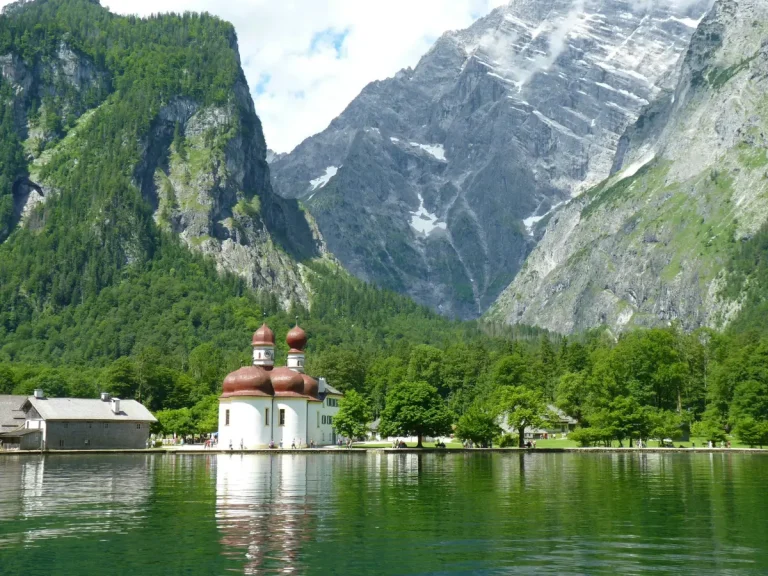
Before my transportation plans went sideways, I planned to visit Königssee and the famous St. Bartholomä pilgrimage church before visiting Eagle’s Nest.
Unless the lake freezes, boat tours operate year-round to St. Bartholomä and take about 35 minutes one-way. If you’re interested in going to Salet, which is an additional 25 minutes, boats only run from April to mid-October.
Timetables change based on the season, so double-check them before you go.
Old Town Berchtesgaden
I also had grand plans to have lunch in Old Town Berchtesgaden. (The Goldener Bär’s menu looked delicious!)
Old Town Berchtesgaden is a short walk from the train station. If you’re castle-obsessed like me, you may want to check out the pink palace, aka Königliches Schloss Berchtesgaden.
And if you’re also like me and into cemeteries, Hitler’s sister, Paula, is buried in the Berchtesgaden Friedhof.
How to Get to Berchtesgaden From Salzburg
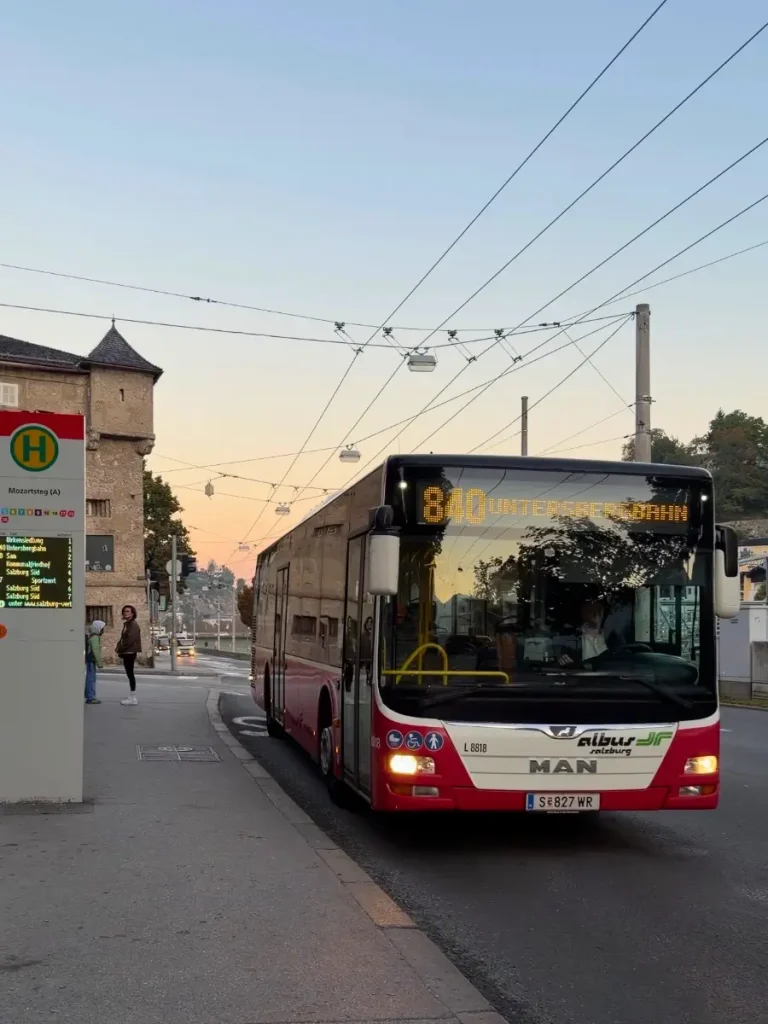
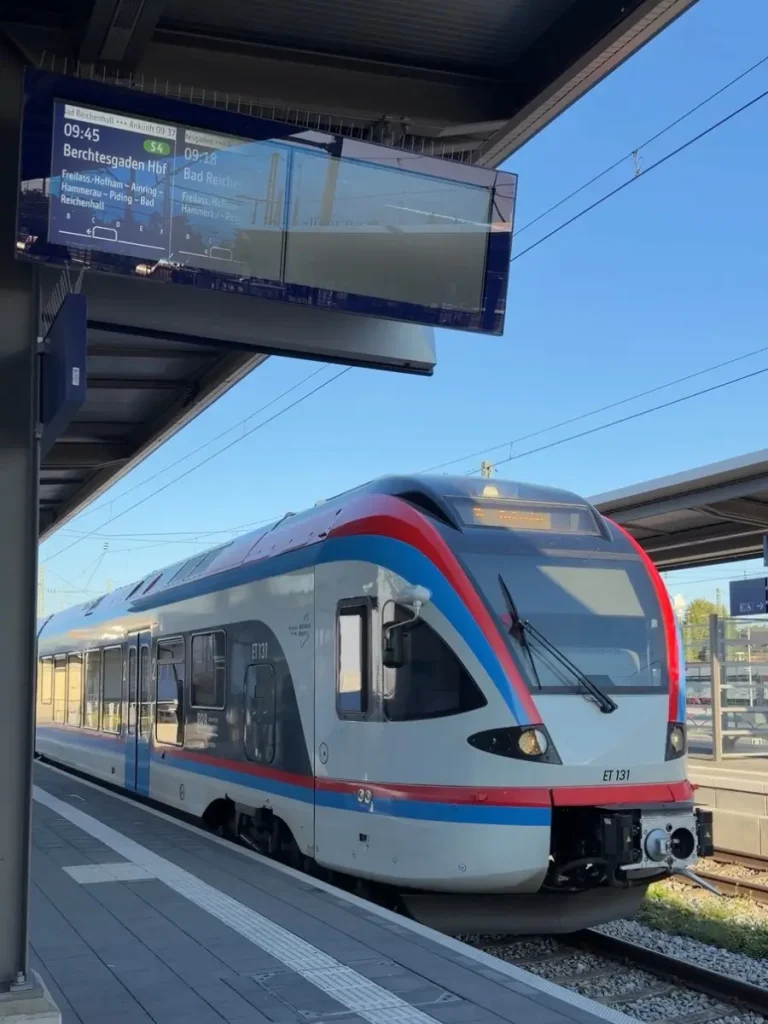
There are several ways to get to Berchtesgaden from Salzburg, including bus, train and car. I took public transportation, so I’ll focus on those options. If you prefer to drive, there’s a large parking lot at Dokumentation Obersalzberg.
Bus 840
Taking the bus to Berchtesgaden from Salzburg is the fastest and cheapest option. The bus ride is less than an hour. And if you have the Guest Mobility Pass, you only have to pay for a ticket from the Austrian/German border to Berchtesgaden.
When I visited Eagle’s Nest, taking the bus was the original plan. In fact, I was at the bus stop right before it arrived at 7:19 am, only to find out from the bus driver that it wasn’t possible to get past a certain point due to a bridge being repaired. So, I quickly had to pivot to taking the train.
S-Bahn
The S-Bahn to Berchtesgaden is not only more expensive than the bus, but it also takes longer. A Day Ticket, which lets you make as many stops and transfers until 3:00 am the following day, costs €21.20.
The S-Bahn leaves from the Salzburg Hauptbahnhof, and you’ll need to switch trains in Freilassing to continue on to Berchtesgaden.
The one-way journey usually takes around 80 minutes, but that wasn’t my experience.. My train from Salzburg left at 8:17 am and was supposed to arrive in Berchtesgaden at 9:38 am. I ended up arriving in Berchtesgaden at around 9:50 am after a delay at one of the stops.
How to Get from Berchtesgaden Hbf to Dokumentation Obersalzberg
Whether you take Bus 840 or the S-Bahn to Berchtesgaden, you will need to take Bus 838 to Dokumentation Obersalzberg. The bus stops directly in front of the train station and you can buy a ticket directly from the bus driver.
A one-way ticket cost me €5.80, and I’ll just skip over the part where I couldn’t do math and the bus driver thought I was crazy. The bus ride is about 15 minutes.
As far as getting back to the train station, you’ll have to plan accordingly. My tour got back at 5:00 pm, which was about 20 minutes too late to catch the bus. I ended up having to wait another 39 minutes to catch the next one.
Guided Tour from Salzburg
Don’t want to deal with public transportation? Before the fire, tour companies offered bus tours from Salzburg to Eagle’s Nest. One company I considered was Panorama Tours. (I loved their Sound of Music tour!) The tour lasted around 4.5 hours, which means you’d be back in Salzburg by the afternoon. Because Eagle’s Nest closes in the winter, this tour only operated from May through October.
2027 Tour Update: I contacted Panorama Tours in October 2026 to ask about their plans following the Eagle’s Nest fire. They confirmed that they’re still working on their 2027 itinerary and haven’t decided whether Dokumentation Obersalzberg will be included as an alternative.
Eagle’s Nest FAQs
Still have questions about visiting Eagle’s Nest? Here are a few more things to know before planning your trip to Berchtesgaden and Obersalzberg.
Do I need my passport to visit Berchtesgaden from Salzburg?
Yes, you should bring your passport when traveling from Salzburg, Austria, to Berchtesgaden, Germany — even if you’re only visiting for the day. While both countries are part of the Schengen Area, you’re still crossing the border into another country. Germany may conduct border checks, and authorities can board trains and ask passengers for identification.
Is the Eagle’s Nest open year-round?
The Eagle’s Nest is typically open from mid-May through October, depending on weather conditions. Because of its location high in the Bavarian Alps, the mountain road closes during winter when snow and ice make access unsafe.
Following the October 2026 fire, Eagle’s Nest is closed indefinitely, and no reopening date has been announced.
How do you get to Eagle’s Nest from Obersalzberg?
Before the October 2026 fire, you could take the Kehlsteinlinie (Bus 849) that picks up and drops off near Dokumentation Obersalzberg. The shuttle buses typically ran every 25 minutes.
The scenic ride along Kehlsteinstraße took about 15 minutes, passing through five tunnels. From the upper bus stop, you walked through a 124-meter tunnel before taking the famous brass elevator another 124 meters up to Eagle’s Nest.
The bus typically operated from mid-May through October, depending on weather conditions. However, service ended early in 2026 following the fire, and no reopening date has been announced.
You could also hike to the Eagle’s Nest, but that obviously took longer than the bus.
Do you need a ticket to visit Eagle’s Nest?
Kehlsteinhaus is free to visit. If you take the shuttle bus from Obersalzberg to Eagle’s Nest, your ticket includes the round-trip journey and the elevator ride to the top. There’s also a one-way bus ticket option for those who would rather hike one direction.
Note: All roads and hiking trails leading to the Eagle’s Nest, including the surrounding area, are closed indefinitely.
Why is it called “Eagle’s Nest”?
The building’s German name is Kehlsteinhaus, after the mountain it sits on. The nickname “Eagle’s Nest” became popular among English speakers during World War II and is often attributed to French diplomat André François-Poncet, who reportedly used the term to describe Hitler’s mountaintop retreat.
Final Thoughts on the Eagle’s Nest
Visiting the Eagle’s Nest is an experience I’ll never forget, especially after the fire. However, Eagle’s Nest is just one of the many things to do in Berchtesgaden. Obersalzberg is rich in history, and there’s so much to see and learn. So even if you can’t go to the Eagle’s Nest, Berchtesgaden is still worth the trip.
Check Out My Other Salzburg Guides
The Ultimate Guide to Salzburg’s Sound of Music Tours
This New Salzburg Museum Is a Must-Visit for Sound of Music Lovers
5 Things Fans Should Know Before Hiking the Sound of Music Trail
How to Conquer Hohensalzburg Fortress Like a Pro
Inside the World’s Largest Ice Cave: Eisriesenwelt
The Best Things to Do in Werfen, Austria
Salzburg to Hallstatt Day Trip: Best Things to Do In Hallstatt
Pin Now, Plan Later
Save this Eagle’s Nest pin for your to help plan your day trip to Berchtesgaden.